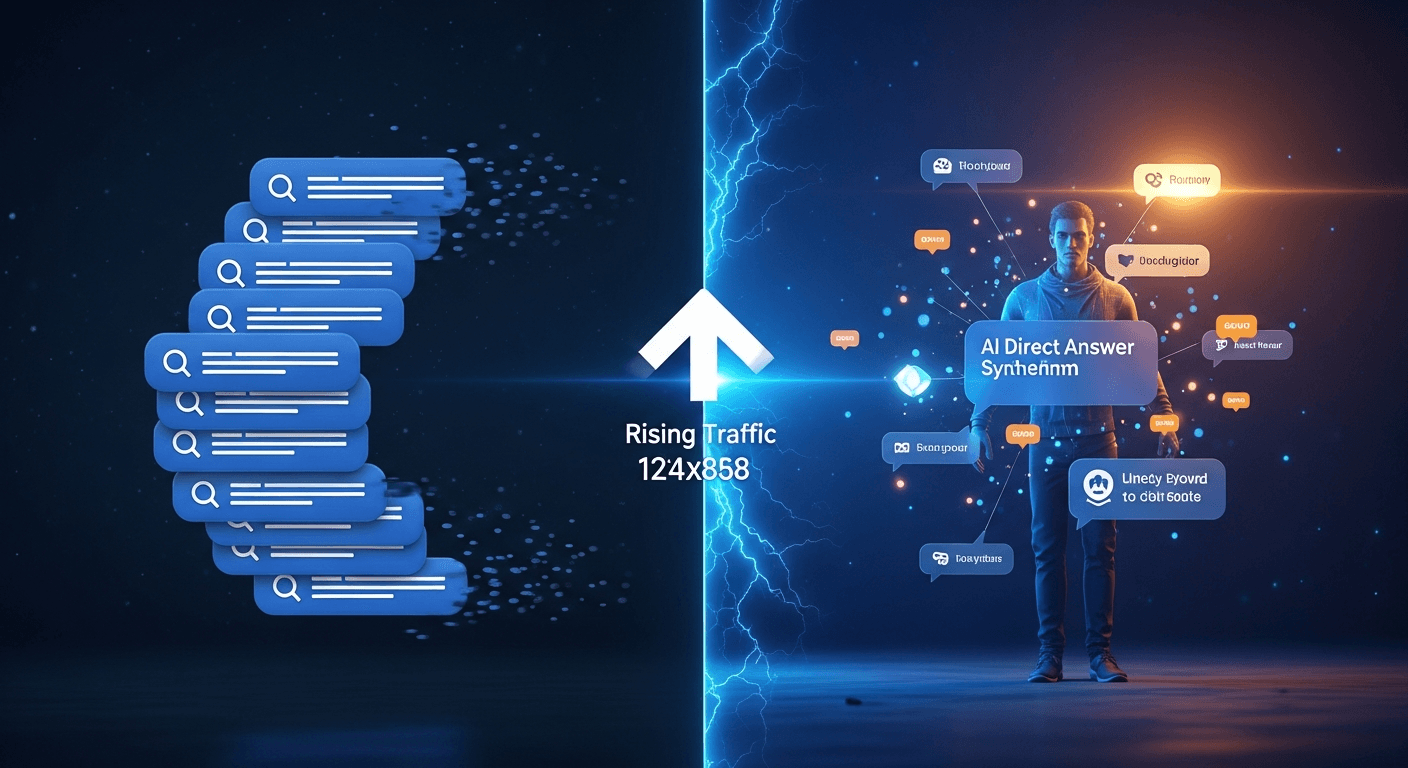
AI Search Is Outpacing Organic by 165x

AI search traffic is growing 165 times faster than traditional organic search — and it's not slowing down (Ahrefs / Graphite, 2025–2026). ChatGPT alone reached 900 million weekly active users in January 2026, up from 400 million eleven months earlier. Platforms like Gemini, Claude, and Perplexity are adding tens of millions more every quarter.
Key Takeaways
- AI search traffic grows 165x faster than organic (Ahrefs/Graphite, 2026).
- ChatGPT cites only 15% of pages it retrieves — 85% never appear in any response (AirOps, 2026).
- GEO techniques boost AI citation visibility by up to 40% (Princeton University, ACM KDD 2024).
- 86% of AI citations come from brand-owned sources (Yext, 6.8M citations, 2025).
- Content updated within three months earns 67% more ChatGPT citations than stale pages (SE Ranking, 2025).
For brands, the gap between search traffic and AI traffic is closing fast. ChatGPT now drives 87.4% of all AI referral traffic to websites (Semrush, March 2026). The question isn't whether AI search matters. It's whether your content is structured to earn citations when it does.
What Is AI Search Optimization (GEO)?

Generative Engine Optimization (GEO) is the practice of optimizing your content to appear in AI-generated responses. Unlike traditional SEO, which focuses on ranking in search engine results pages (SERPs), GEO focuses on being cited and referenced by AI models when they generate answers.
GEO involves several key strategies:
• Citation Optimization: Ensuring your content is cited as a source by AI models
• Authority Building: Establishing your brand as a trusted source in your industry
• Structured Data: Using schema markup and structured formats that AI models can easily parse
• Content Quality: Creating comprehensive, accurate, and well-sourced content that AI models prefer to reference
Why AI Search Optimization Matters Right Now
44% of AI prompts return zero brand mentions — even in categories where dozens of competitors exist (BrightEdge, 2025). Most brands are simply invisible in AI responses. That invisibility compounds: the brands AI models cite today are the ones they learn to associate with credibility tomorrow.
The opportunity isn't just traffic. ChatGPT visitors convert at 15.9% — roughly 9x higher than Google organic's 1.76% (Seer Interactive, June 2025). AI-referred users arrive pre-educated, already trusting the recommendation. The volume is smaller than Google; the intent is far higher.
ChatGPT currently mentions brands 3.2x more often than it cites them as sources, averaging 2.4 mentions per prompt but only 0.74 citations (BrightEdge, 2025). The gap between mentioned and cited is where GEO creates the most value. Closing that gap is the primary objective of AI search optimization.
How AI Models Decide What to Cite
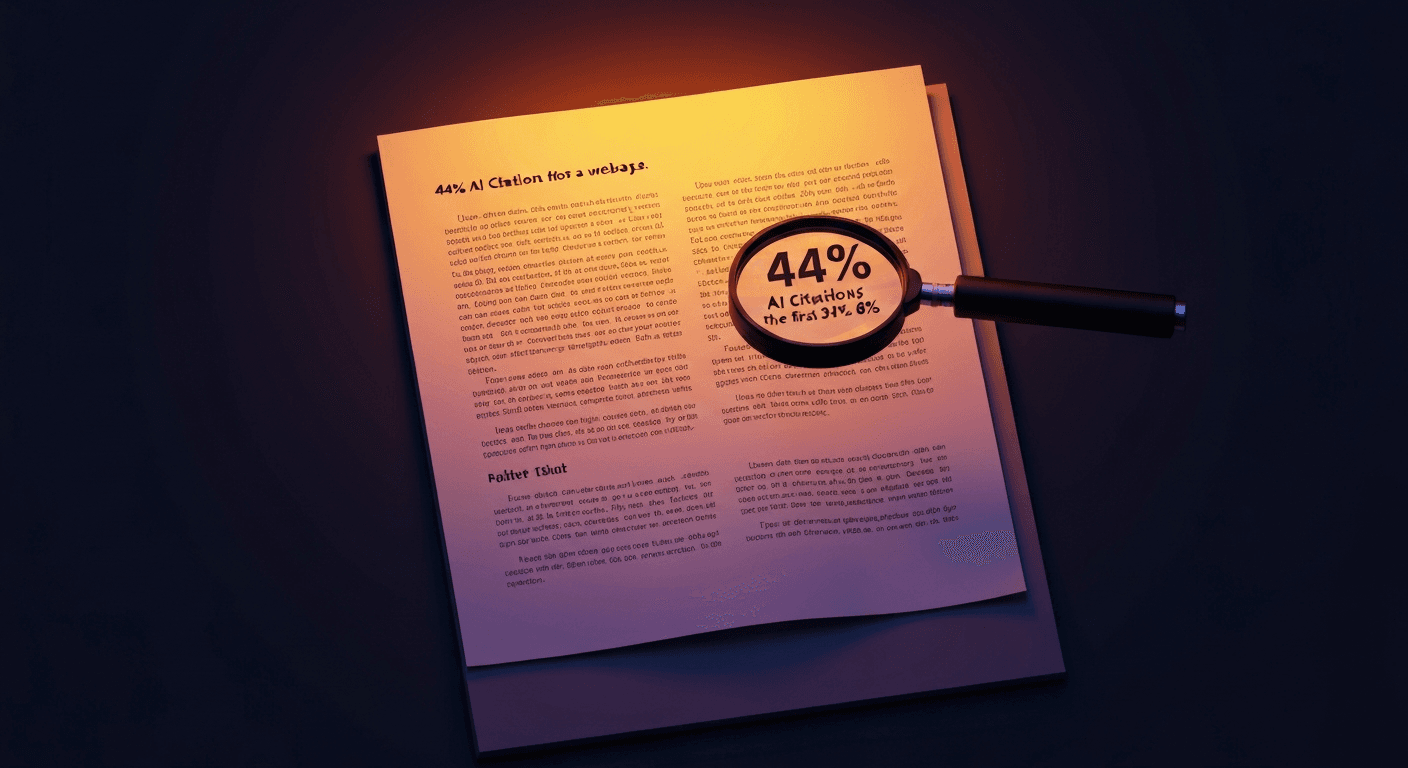
44.2% of all ChatGPT citations originate from the first 30% of a webpage — the introduction and early body sections (ALM Corp analysis of 1.2 million ChatGPT responses, February 2026). Where your answer appears on the page matters as much as the quality of the answer itself.
Answer-first formatting is the single most actionable change you can make. Every page should open with a clear, factual, self-contained answer in the first 150 words. State the key finding, include a sourced statistic, and make it extractable without reading the rest of the page. AI models scan for quotable passages — give them one at the top.
Content depth signals comprehensiveness. SE Ranking's analysis of 216,524 pages found articles over 2,900 words averaged 5.1 ChatGPT citations, compared to just 3.2 for articles under 800 words (SE Ranking, 2025). Structured elements — FAQ sections, numbered guides, definition blocks, data tables — increase citation probability further by making content easy to parse and extract.
Five Strategies That Increase AI Citations

Answer-First Formatting
Open every page with a self-contained, factual answer in the first 150 words. 44.2% of ChatGPT citations come from the first 30% of a page (ALM Corp, February 2026). Lead with your key insight — don't bury it.
Citation Capsules
Write 40-60 word self-contained passages throughout your content. Each capsule states a claim, includes supporting data with a named source, and reads as a complete thought. AI models prefer to cite passages they can extract without surrounding context.
Domain Authority Building
Sites with 32,000+ referring domains average 5.6 ChatGPT citations per page, versus 1.6 for sites with under 2,500 referring domains (SE Ranking, 2025). Build authority through digital PR, expert quotes in industry publications, and original research.
Content Freshness
Content updated within three months earns 67% more citations than stale pages — 6.0 vs. 3.6 average citations (SE Ranking, 2025). Set a quarterly review cycle for your top 20 pages.
Structured Data and llms.txt
Use Schema.org markup for FAQ pages, articles, and organizations. Add an llms.txt file — a plain-text summary of what your brand does, formatted for AI crawler consumption.
Own Your Brand's AI Citation Sources
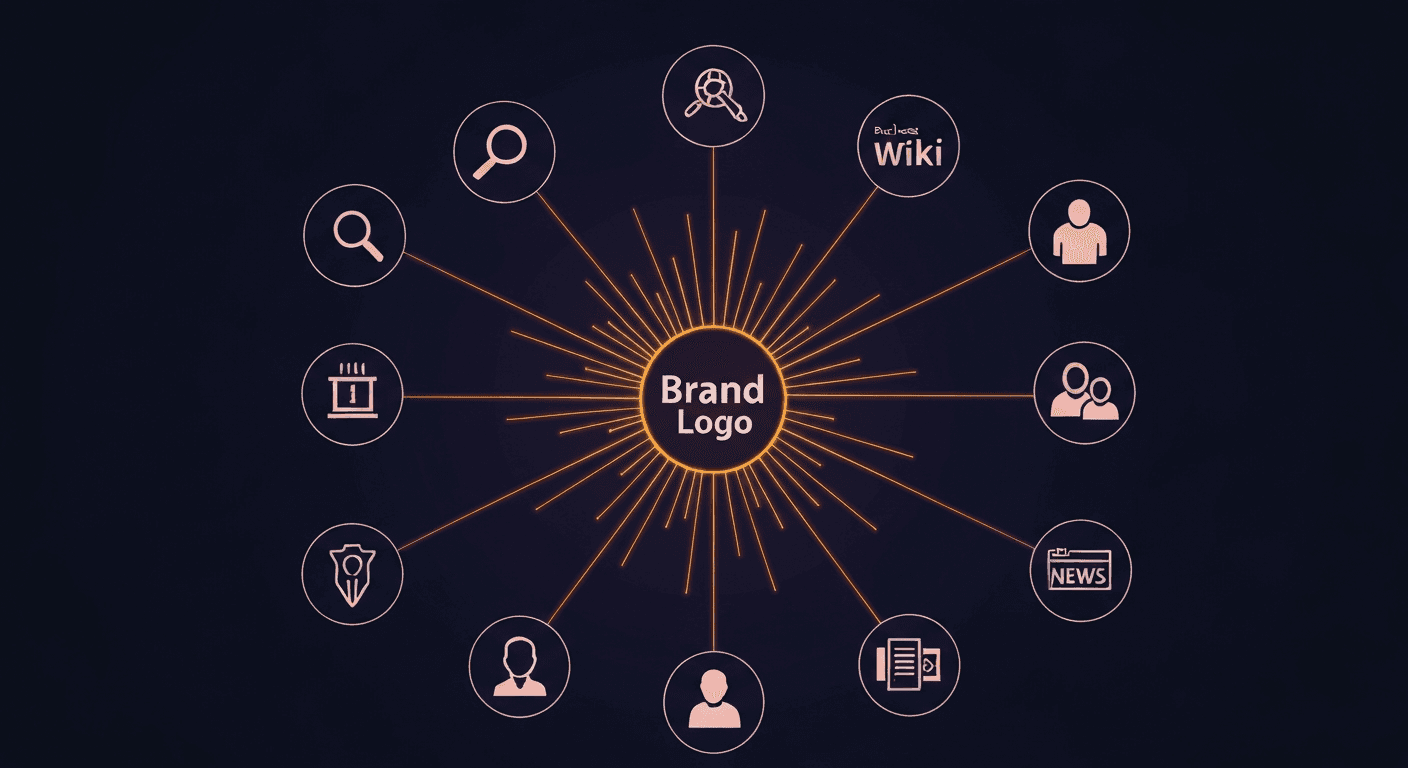
86% of all AI citations across ChatGPT, Gemini, and Perplexity come from sources brands already control — 44% from brand websites and 42% from business listings (Yext, analysis of 6.8 million citations, July–August 2025). The most impactful GEO investment is optimizing what you already own.
Business listings punch above their weight. Despite being less content-rich than full websites, they account for 42% of citations in the Yext study. Google Business Profile, Bing Places, LinkedIn company page, and industry directories like G2, Capterra, and Trustpilot are all active citation sources for AI models.
Wikipedia and Wikidata are among the highest-authority signals available. AI models are heavily trained on and frequently cite Wikipedia. If your brand meets Wikipedia's notability guidelines, pursuing an article is one of the highest-leverage GEO actions available. At minimum, create a verified Wikidata entity with accurate structured properties.
Keeping Content Fresh for AI Crawlers
Content recency is the second-strongest predictor of AI citations after domain authority. SE Ranking data shows pages updated within three months average 6.0 ChatGPT citations, compared to 3.6 for outdated content — a 67% citation premium for fresh pages (SE Ranking, 2025).
You don't need to rewrite pages from scratch. Adding a 'last updated' date, replacing outdated statistics with current data, and expanding sections to cover recent developments all register as freshness signals. The key is that content reflects the current state of your industry.
Build a freshness calendar
audit your top 20 pages each quarter. Pages on time-sensitive topics — pricing, regulations, benchmarks, best practices — need review every three months. Stale content loses AI citations faster than it loses Google rankings.
Frequently Asked Questions
Start Building AI Search Visibility Today
AI search traffic is growing 165 times faster than organic. The brands appearing consistently in ChatGPT, Gemini, and Perplexity responses aren't there by accident — they've structured their content, built authority, and refreshed their pages to match how AI models select citations.
The framework covers five areas
answer-first formatting, citation capsules, domain authority building, brand footprint ownership, and content freshness. None of these require starting over. Most can be applied to existing content within a single content sprint.
Track your progress with Share of Model — the percentage of relevant AI queries where your brand gets cited. It's the GEO equivalent of keyword ranking, and it's the metric that tells you whether your optimization is working. Yozigo tracks Share of Model across ChatGPT, Gemini, Claude, and Perplexity automatically.