Which AI Prompts Should You Actually Track?
TL;DR
Track the buyer questions that already show real search demand and clear commercial intent — pulled from your own Google Search Console data, People Also Ask, and competitor gaps, not invented by asking an AI to brainstorm. Start with 5–10 high-intent prompts, score them, and expand only once those earn citations.
Tracking a long list of prompts nobody asks is the most common way brands waste their GEO budget. With 44% of AI prompts returning zero brand mentions (BrightEdge, 2025) and ChatGPT driving 87.4% of AI referral traffic (Semrush, Mar 2026), the difference between visibility and invisibility is often a shortlist of the right questions — not the length of the list.
Key Takeaways
- Start with 5–10 high-intent prompts, not fifty — depth beats breadth.
- Your Google Search Console question queries are the closest free proxy for what people ask AI assistants.
- People Also Ask, Reddit, Quora, and competitor FAQs supply the conversational phrasing AI users mimic.
- Score every candidate with the Prompt Opportunity Score before tracking it.
- Re-run discovery monthly — prompt demand shifts as fast as search demand.
This is the companion to our guide on getting mentioned in ChatGPT, Gemini, and Claude: you cannot earn citations for questions you have not identified. Here is the repeatable process to find, score, and prioritise the prompts worth your effort.
What Is an AI Prompt, and How Is It Different From a Keyword?
| Dimension | SEO keyword | AI prompt |
|---|---|---|
| Form | Short, compressed phrase | Full conversational question |
| Example | geo seo tools | what are the best GEO tools for B2B SaaS in 2026? |
| Carries intent | Partial — inferred from modifiers | Explicit — context is in the wording |
| Best source | Keyword volume tools | GSC questions, People Also Ask, community Q&A |
| How it is matched | Ranking against the query | Fanned out into sub-questions, matched to passages |
An AI prompt is the full, conversational question people ask an assistant, while a keyword is the compressed phrase people type into Google. A keyword is 'geo seo tools'; the matching prompt is 'what are the best GEO tools for a B2B SaaS company in 2026, and how do they compare?'. Prompts are longer, more specific, and carry the intent and context a keyword strips away.
This difference drives your discovery method. Keyword tools report volume but flatten phrasing; prompt discovery keeps the natural language intact, because that phrasing is exactly what the AI fans out into sub-questions. Prompts also cluster — 'how do I get cited in ChatGPT', 'why isn't my brand in AI answers', and 'how to improve AI visibility' are one underlying need, so one strong page can answer the whole cluster.
Where Do You Find the Best AI Prompts?
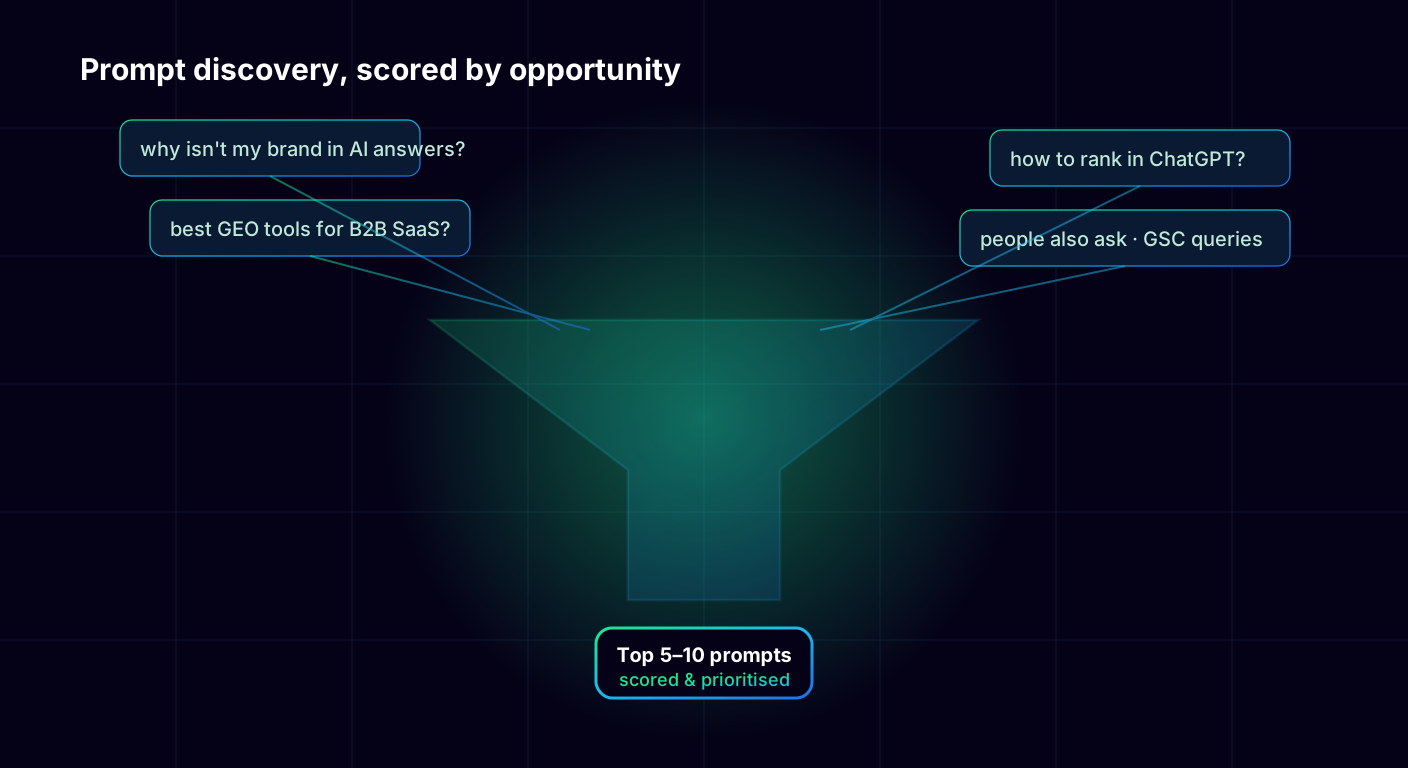
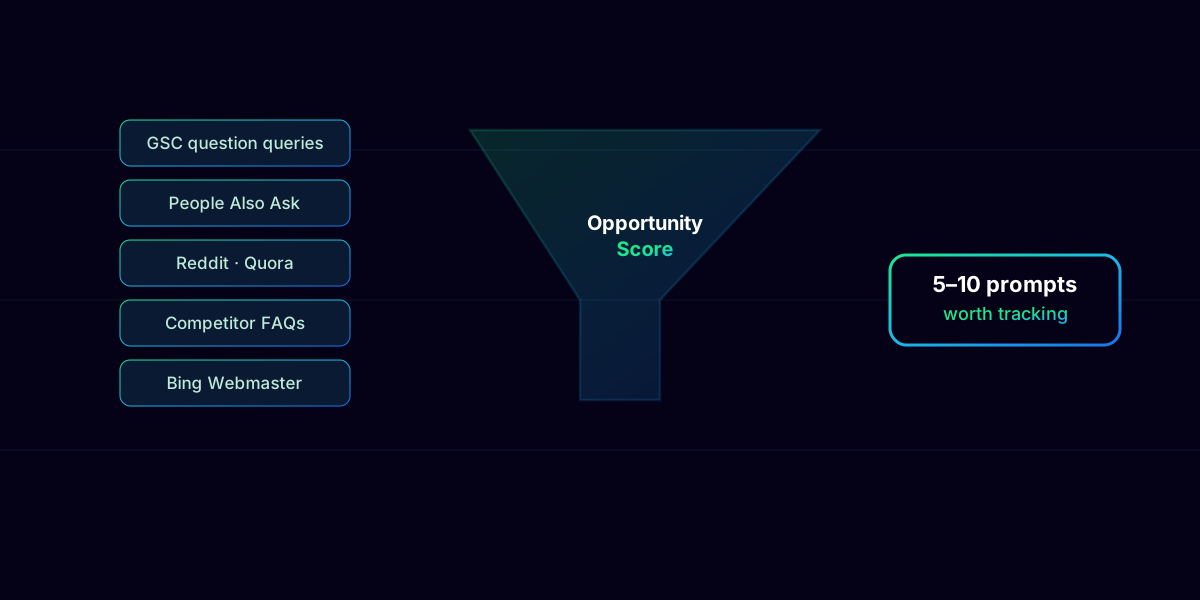
You find the best AI prompts from five sources, ranked by signal quality: Google Search Console question queries, People Also Ask, communities like Reddit and Quora, competitor FAQs, and Bing Webmaster Tools. Together they triangulate real demand in your buyers' own words — far more reliable than any AI-generated brainstorm.
Google Search Console is the single best free proxy because it is your real audience in their own language; filter the query report for how, what, why, best, which, and can. The full method is in our GSC and Bing guide. Layer People Also Ask for the conversational branches, communities for phrasing no keyword tool captures, and competitor FAQs to expose the questions rivals answer — and the ones they miss.
How Do You Score and Prioritise AI Prompts?
| Factor | Weight | What it measures |
|---|---|---|
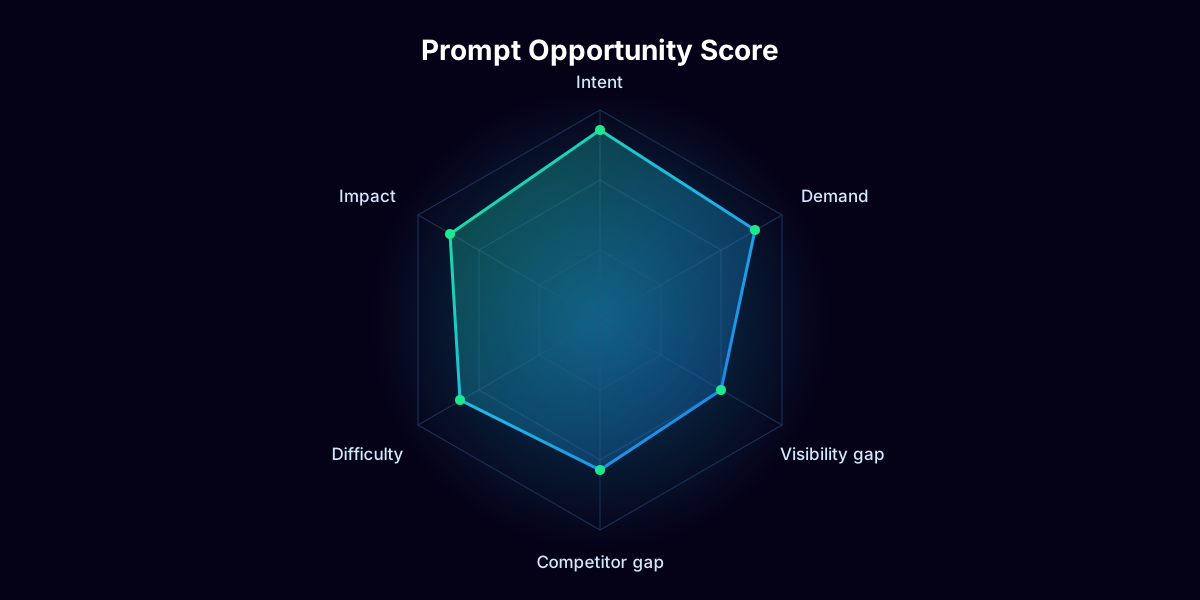
| Intent Weight | 25% | How close the prompt sits to a buying decision (commercial vs informational) |
| Search Demand | 20% | GSC impressions or Bing data as a demand baseline |
| Visibility Gap | 20% | Whether you already get mentioned in AI answers for it |
| Competitor Gap | 15% | How thinly rivals cover the prompt today |
| Difficulty | 10% | Content depth and authority needed to compete |
| Business Impact | 10% | Revenue or pipeline a citation could influence |
You score and prioritise AI prompts with a weighted Prompt Opportunity Score across six factors: Intent Weight, Search Demand, Visibility Gap, Competitor Gap, Difficulty, and Business Impact. Score each 0–100, apply the weight, sum, then shortlist the top 5–10 and ignore the rest until the next cycle.
The weighting keeps a small team focused on prompts that move the business. Intent and demand carry the most weight because a high-intent prompt with real search volume and a wide visibility gap is exactly where a single well-structured page earns outsized citations.
What Does the Prompt Research Workflow Look Like?
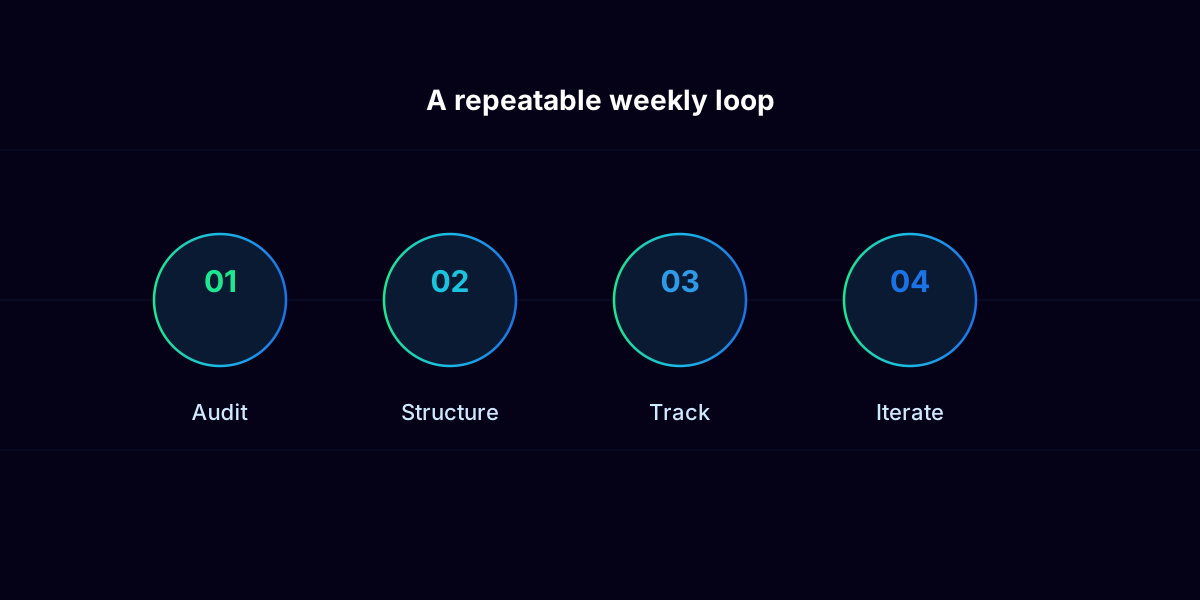
The prompt research workflow is a six-step loop that runs monthly: build a seed list, filter and expand, score every candidate, validate with the AI itself, assign content, then loop. It converts scattered question data into a maintained shortlist you measure over time.
Build a seed list
Brainstorm core topics, then expand each through Google Search Console, People Also Ask, and your customer support inbox.
Filter and expand
Keep the question-style phrases, then use AlsoAsked or Trends to branch each seed into variations and sub-topics.
Score every candidate
Apply the Prompt Opportunity Score and shortlist the top 5–10.
Validate with the AI itself
Run the shortlist through ChatGPT, Gemini, and Claude to confirm which brands currently appear — this verifies the gap before you invest.
Assign content
Map each priority prompt to a page to create or rewrite with an answer block that responds directly to it.
Loop monthly
Add new prompts, re-score, retire those that lost demand, and feed the shortlist into your tracking. See how Yozigo automates discovery-to-tracking.