How ChatGPT and Gemini Choose Which Brands to Recommend
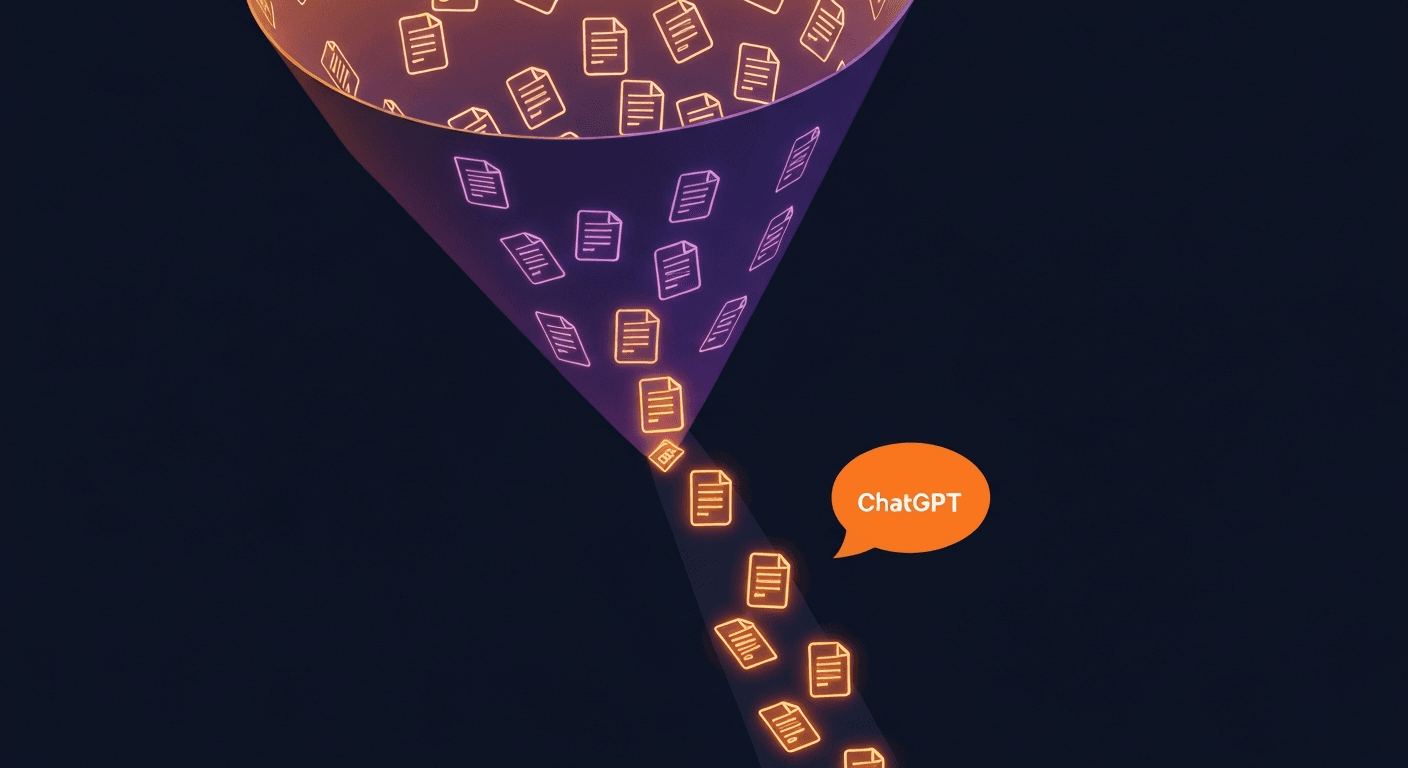
When a user asks ChatGPT or Gemini for a product recommendation, the model retrieves candidate sources and selects the best answer based on four factors: domain authority, content positioning, recency, and brand footprint breadth. ChatGPT now drives 87.4% of all AI referral traffic to websites (Semrush, March 2026) — and only 15% of the pages it retrieves ever appear in the final response (AirOps, 2026).
Key Takeaways
- ChatGPT cites only 15% of pages it retrieves — 85% are never shown (AirOps, 2026).
- 86% of AI citations come from brand-owned sources — websites and business listings (Yext, 6.8M citations, 2025).
- 44.2% of citations originate from the first 30% of a page (ALM Corp, 1.2M responses, February 2026).
- Sites with 32K+ referring domains earn 3.5x more citations than low-authority sites (SE Ranking, 2025).
- ChatGPT visitors convert at 15.9% — roughly 9x higher than Google organic (Seer Interactive, 2025).
The brands that appear consistently in AI responses don't get there by chance. They've structured their content to be extractable, built authority across trusted sources, and maintained fresh, factual pages that AI models can confidently cite.
Structure Your Content for AI Extraction
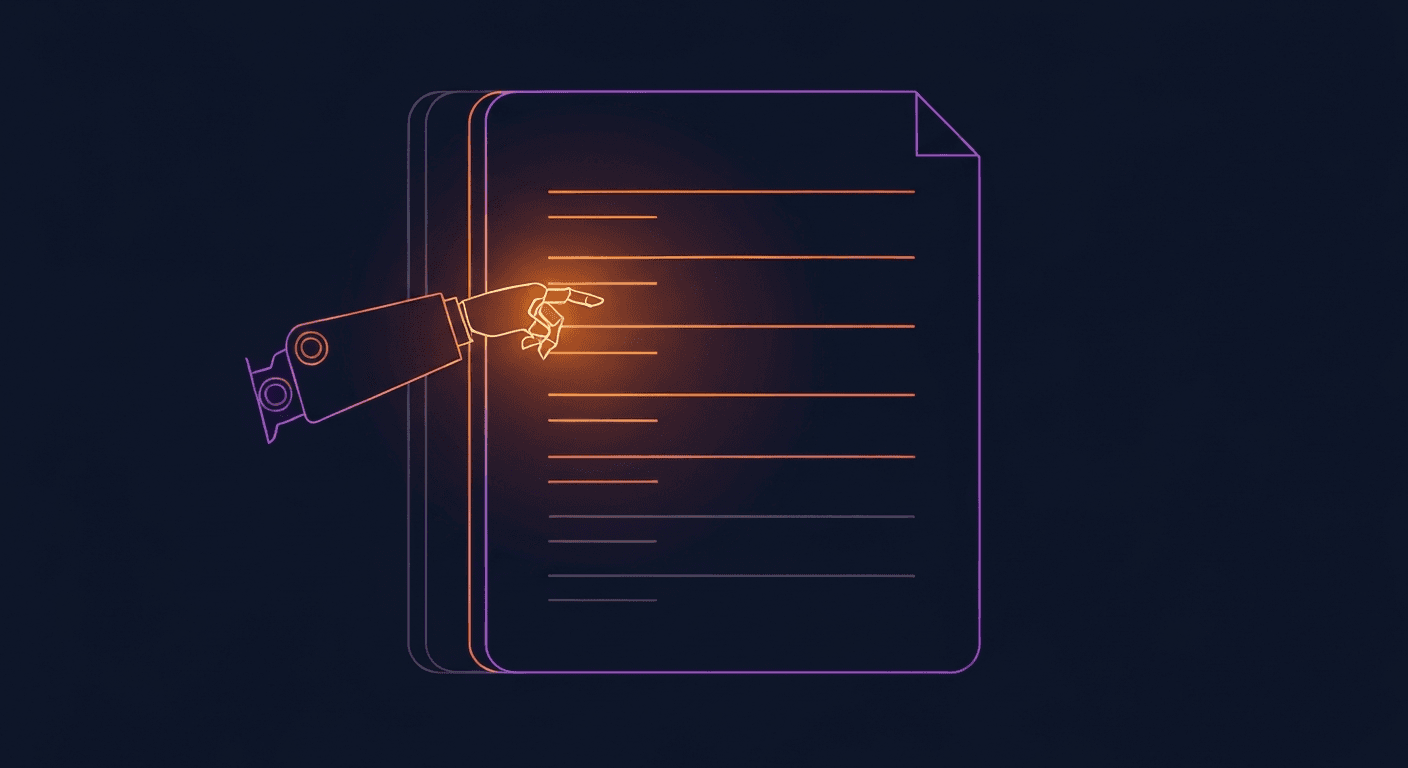
Where your answer appears on the page determines whether AI models cite you. An analysis of 1.2 million ChatGPT responses found that 44.2% of all citations originate from the first 30% of a webpage — the introduction and early body sections (ALM Corp / Kevin Indig, February 2026). Bury your key finding in section 4, and ChatGPT almost certainly won't cite it.
Answer-first formatting is the fix. Open every page with a clear, factual, self-contained answer in the first 150 words. State the key finding, include a sourced statistic, and make it extractable without reading the rest of the page. AI models are scanning for quotable passages.
Write citation capsules
40-60 word self-contained passages throughout your content that state a claim, include supporting data with a named source, and read as a complete thought. Distribute two to three per page. These are the passages AI models extract and quote — short enough to cite verbatim, specific enough to be authoritative.
Actionable Steps for Brand Visibility
Structured Knowledge Bases
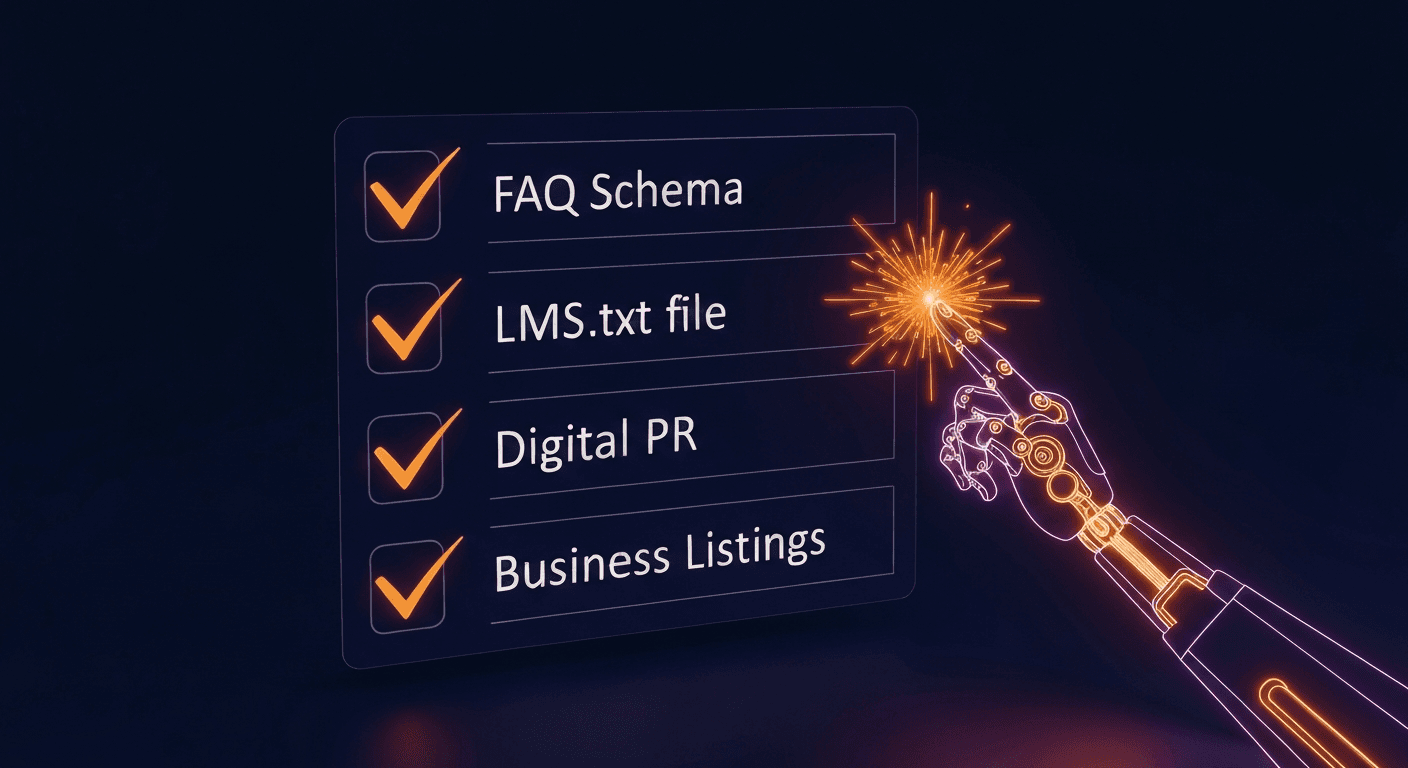
Your website's FAQ, About, and product specification pages are the most-cited content types by AI models. Mark them up with Schema.org FAQ schema, Article schema, and Organization schema. Well-structured pages are easier to parse and more likely to be selected as citation sources.
Digital PR and Co-Citation
Press releases, expert quotes in major publications, and reviews on G2, Capterra, and Trustpilot feed directly into AI retrieval systems. Being mentioned alongside recognized industry leaders in the same article — co-citation — trains AI models to associate your brand with credibility. Sites with 32,000+ referring domains average 5.6 ChatGPT citations per page vs. 1.6 for low-authority sites (SE Ranking, 2025).
Add an llms.txt file
A plain-text document at yourdomain.com/llms.txt tells AI crawlers exactly what your brand does, your key products, and the canonical facts you want cited. State your value proposition in two to three declarative sentences. This format — modeled on robots.txt — is becoming a standard GEO signal.
Optimize Business Listings
42% of all AI citations come from business listings (Yext, 6.8 million citations, 2025). Google Business Profile, Bing Places, LinkedIn company page, and industry directories like G2 and Clutch are active citation sources. Keep them fully populated, accurate, and consistent in brand description.
Digital PR: The GEO Signal Most Brands Underestimate
86% of all AI citations across ChatGPT, Gemini, and Perplexity come from brand-owned sources — 44% from brand websites and 42% from business listings (Yext, analysis of 6.8 million citations across 1.6 million queries, July–August 2025). The highest-leverage GEO investment is often optimizing what already exists.
Beyond owned channels, authoritative third-party mentions are the most powerful GEO signal you don't control directly. Wikipedia citations, features in major industry publications, and expert roundups create the co-citation signals AI models use to validate brand authority. Wikidata entities provide structured authority signals that LLMs incorporate heavily.
Original research is the fastest path to earned citations. When you publish data that journalists and bloggers cite back to you, every secondary mention creates a new co-citation signal. One well-executed original study can generate hundreds of authoritative references — each one training AI models to associate your brand with expertise in that topic.
ChatGPT vs. Gemini: Key Differences to Know

ChatGPT Search uses Bing's index for real-time retrieval. Gemini relies more heavily on Google's index and its own search infrastructure. In practice, this means a page well-indexed by Bing gets cited more often in ChatGPT responses, while a page with strong Google rankings has an advantage in Gemini.
The citation selection logic is similar across both: domain authority, answer-first content positioning, and recency all matter. But Gemini gives heavier weight to Google's E-E-A-T signals — Experience, Expertise, Authoritativeness, and Trustworthiness — which align closely with traditional SEO best practices. ChatGPT weights domain authority and content structure more independently.
The practical implication
optimizing for both simultaneously is straightforward. Ensure your site is indexed by both Bing Webmaster Tools and Google Search Console. Write answer-first content with sourced statistics. Maintain fresh pages updated within the past three months. These signals work across both platforms — and across Claude and Perplexity as well.
Measuring Your AI Brand Visibility
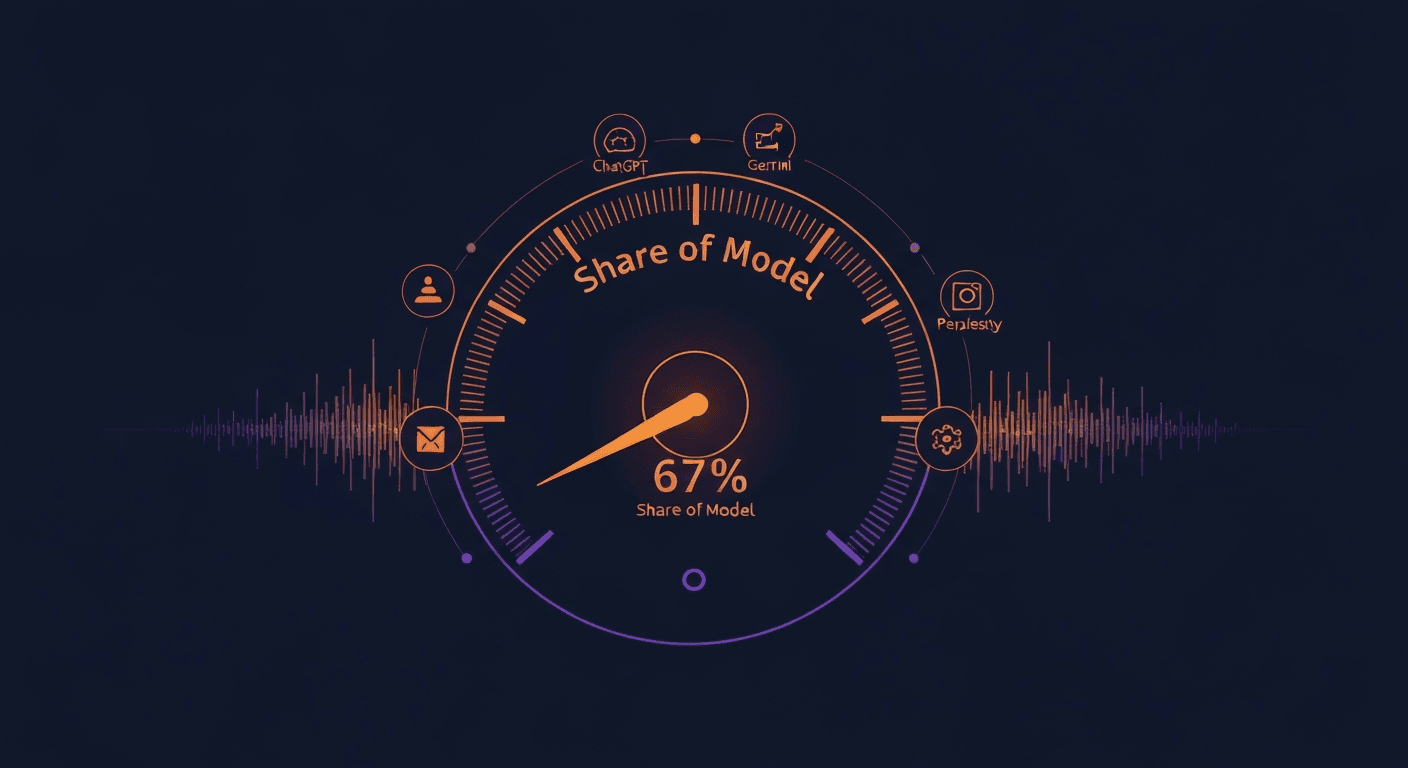
The primary metric for AI brand performance is Share of Model (SoM) — the percentage of relevant AI queries where your brand is cited or mentioned. ChatGPT drives 87.4% of all AI referral traffic (Semrush, March 2026), making this metric the essential leading indicator for AI-era brand performance.
Key metrics to track
citation rate (percentage of AI responses that link to your URL), mention rate (percentage that name your brand without a link), and Share of Model by topic cluster. BrightEdge data shows brands are mentioned 3.2x more often than they're cited — and 44% of prompts return zero brand mentions at all. That 44% is where your GEO opportunity lives.
For manual tracking
run 10 to 20 relevant queries weekly in ChatGPT Search mode and log when your brand appears. Compare citation frequency across ChatGPT, Gemini, Claude, and Perplexity to identify gaps. Track trend direction over 30 and 90-day windows — improvement in Share of Model is the clearest signal that GEO is working.
Frequently Asked Questions
Start Optimizing for ChatGPT and Gemini Today
ChatGPT and Gemini together reach over a billion active users and drive the vast majority of AI referral traffic to websites. The brands appearing in their responses consistently have optimized for four things: domain authority, answer-first content structure, brand footprint breadth, and content freshness.
None of these require starting from scratch. Apply answer-first formatting to your top pages, add citation capsules, populate your business listings, and update your llms.txt file. These are hours of work — not months — and the impact on AI citation frequency compounds over time.
Yozigo tracks your Share of Model across ChatGPT, Gemini, Claude, and Perplexity automatically — giving you the data to measure GEO progress and prioritize what to optimize next.