Varför varumärkessynlighet i ChatGPT är viktigt 2026
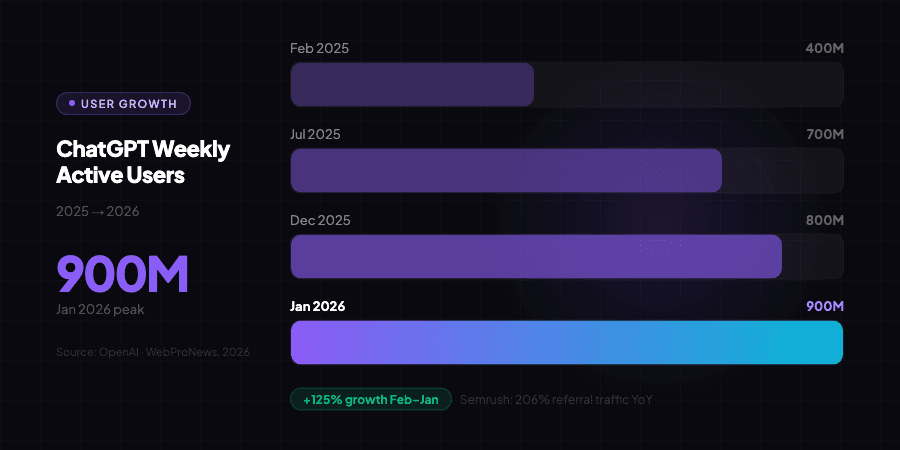
ChatGPT nådde 900 miljoner veckovisa aktiva användare i januari 2026 — upp från 400 miljoner bara elva månader tidigare — vilket gör det till en av de snabbast växande plattformarna i internethistorien (Sam Altman via WebProNews, jan 2026). För varumärken är detta inte bara en rubrik: ChatGPT driver nu 87,4 % av all AI-referenstrafik till webbplatser, med utgående klick som växer med 206 % jämfört med föregående år (Semrush-analys av 200 miljoner användare, mars 2026).
Viktiga insikter
• ChatGPT citerar endast 15 % av sidorna de hämtar — 85 % visas aldrig i svaret (AirOps, 2026). • 44,2 % av citeringarna kommer från de första 30 % av en sidas innehåll (ALM Corp-analys av 1,2 miljoner ChatGPT-svar, feb 2026). • Webbplatser med 32 000+ hänvisande domäner får 3,5 gånger fler citeringar än webbplatser med låg auktoritet (SE Ranking, 2025). • 86 % av alla AI-citeringar kommer från källor som hanteras av varumärket själv (Yext, analys av 6,8 miljoner citeringar, 2025). • ChatGPT-trafik konverterar vid 15,9 % — ungefär 9 gånger högre än Google organics 1,76 % (Seer Interactive, juni 2025).
Konverteringsfallet är övertygande. Även om ChatGPT skickar betydligt mindre trafik än Google, fann en fallstudie att ChatGPT-besökare konverterade vid 15,9 % jämfört med endast 1,76 % för Google organic — ungefär 9 gånger högre (Seer Interactive, juni 2025). Det här är användare som redan litar på AI:ns rekommendation när de anländer till din webbplats.
Det finns dock ett gap som de flesta varumärken förbiser. ChatGPT nämner varumärken 3,2 gånger oftare än de citeras som källor, med ett genomsnitt på 2,4 omnämnanden per prompt men endast 0,74 citeringar (BrightEdge, 2025). Samtidigt ger 44 % av alla frågor noll omnämnanden av varumärken. Att stänga detta gap — från osynlig till nämnd, från nämnd till citerad — är exakt vad GEO-optimering handlar om.
Hur ChatGPT bestämmer vilka varumärken som ska citeras
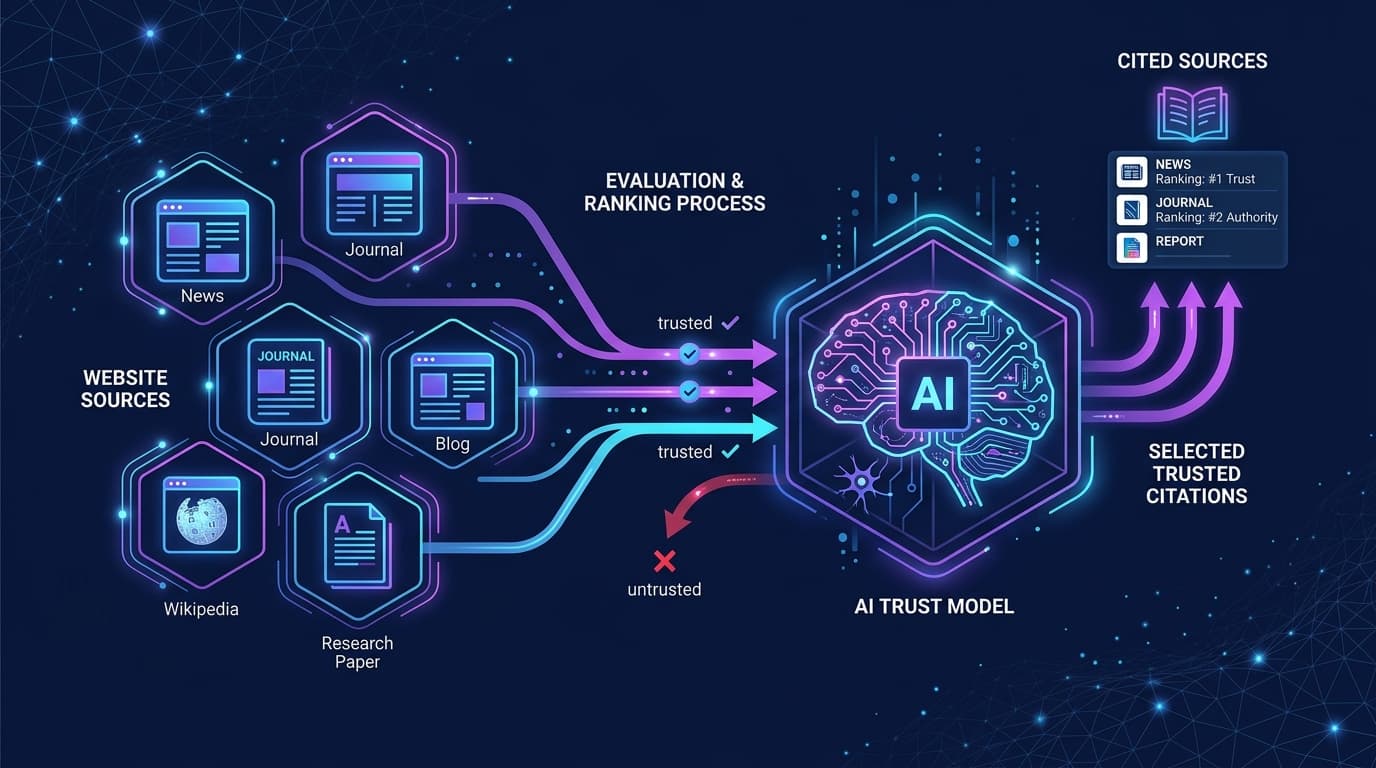
ChatGPT citerar endast 15 % av sidorna de hämtar under en sökning — 85 % av de källor som nås refereras aldrig i det slutliga svaret (AirOps, 2026). Urvalet styrs av fyra faktorer: domänauktoritet, innehållsplacering, innehållsaktualitet och bredden på ditt varumärkes digitala fotavtryck.
Generative Engine Optimization (GEO) är metoden att strukturera ditt innehåll så att AI-modeller väljer det som citatkälla. Till skillnad från traditionell SEO — som riktar sig mot Googles rankningsalgoritm — riktar sig GEO mot hämtnings- och urvalskriterierna hos stora språkmodeller. En granskad studie från Princeton University, publicerad vid ACM KDD 2024, fann att GEO-tekniker kan öka innehållssynligheten i generativa motorer med upp till 40 %.
ChatGPT:s sökkomponent använder Bings index för att hämta kandidatsidor baserat på semantisk relevans, och väljer sedan citat baserat på hur definitivt en sida svarar på frågan, källans domänauktoritet, hur nyligen innehållet uppdaterades och hur tydligt informationen är strukturerad för extrahering. Att optimera alla dessa fyra vektorer är kärnan i GEO-spelboken.
Steg 1: Bygg den domänauktoritet som ChatGPT föredrar
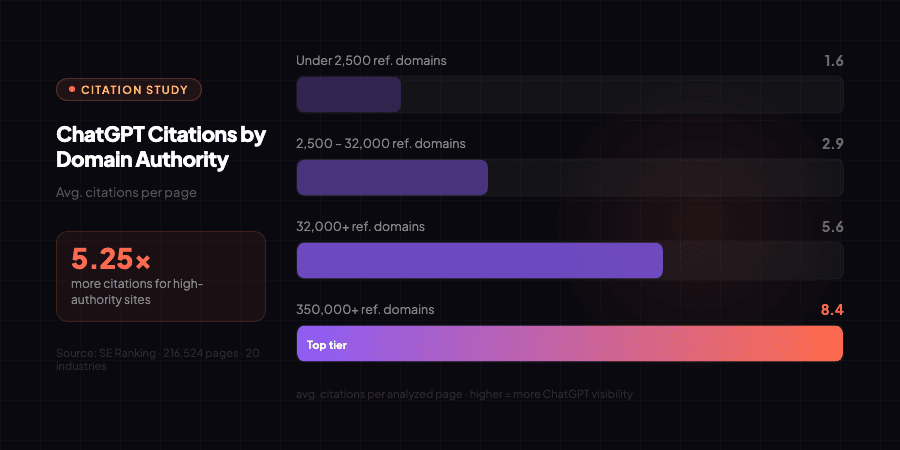
Domänauktoritet är den enskilt starkaste indikatorn för ChatGPT-citeringar. En SE Ranking-analys av 216 524 sidor inom 20 branscher fann att webbplatser med fler än 32 000 hänvisande domäner i genomsnitt fick 5,6 ChatGPT-citeringar per sida — jämfört med endast 1,6 citeringar för webbplatser med under 2 500 hänvisande domäner. Webbplatser med 350 000 eller fler hänvisande domäner snittade 8,4 citeringar per sida (SE Ranking, 2025).
Att bygga GEO-auktoritet skiljer sig från traditionell länkbyggnad. Prioriteringen är medcitering: att nämnas tillsammans med erkända branschledare i samma artiklar, studier eller expertronder. När auktoritetspublikationer refererar till ditt varumärke i samma mening som etablerade namn, lär sig AI-modeller att associera dig med trovärdighet inom det domänet.
Praktiska taktiker för att bygga GEO-auktoritet: publicera originalforskning med unika datapunkter som journalister och bloggare citerar tillbaka till dig; bidra med expertcitat till branschpublikationer; få omnämnanden på Wikipedia, Wikidata och betrodda vertikala kataloger. Varje omnämnande i en auktoritativ källa tränar AI-modeller att behandla ditt varumärke som en legitim referens — inte bara en webbplats.
Enligt SE Rankings analys av 216 524 sidor inom 20 branscher, får webbplatser med över 32 000 hänvisande domäner i genomsnitt 5,6 ChatGPT-citeringar per sida — 3,5 gånger mer än webbplatser med låg auktoritet vid 1,6 citeringar. Domänauktoritet, mätt som antal hänvisande domäner, är den mest konsekventa indikatorn för AI-citeringsfrekvens (SE Ranking, 2025).
Steg 2: Strukturera ditt innehåll för maximala citeringar
Var ditt svar visas på sidan betyder lika mycket som svaret självt. En analys av 1,2 miljoner ChatGPT-svar och 18 012 verifierade citeringar fann att 44,2 % av alla ChatGPT-citeringar kommer från de första 30 % av en webbsida — introduktionen och de tidiga delarna av texten (ALM Corp / Kevin Indig, februari 2026, statistisk signifikans P = 0,0).
Implikationen är direkt
varje sida som siktar på AI-citeringar bör inledas med ett tydligt, sakligt och självständigt svar. Detta är svar-först-formatet. Göm inte din slutsats i sista avsnittet — formulera den inom de första 150 orden. Inkludera en specifik statistik, nämn din källa och gör den viktiga insikten extraherbar utan att man behöver läsa resten av sidan.
Innehållsdjup signalerar också kvalitet till AI-modeller. SE Rankings tidigare nämnda studie fann att artiklar över 2 900 ord snittade 5,1 ChatGPT-citeringar jämfört med endast 3,2 för artiklar under 800 ord. Långformigt, omfattande innehåll — inte sökordsoptimering — är vad AI-modeller tolkar som ett auktoritativt sätt att behandla ett ämne.
Strukturella element som ökar citeringssannolikheten inkluderar FAQ-avsnitt uppmärkta med FAQ-schema, numrerade steg-för-steg-guider, definitionsblock som svarar på 'Vad är X?', och datatabeller. ChatGPT:s hämtningssystem extraherar strukturerade svar; ju tydligare din innehållshierarki är, desto lättare är det att extrahera och citera.
Skriv citeringskapslar genomgående i ditt innehåll: 40 till 60 ord långa självständiga stycken som framför ett påstående, tillhandahåller stödjande data och namnger en källa — allt i ett extraherbart block. AI-modeller föredrar att citera stycken som de kan citera utan att behöva det omgivande sammanhanget. Fördela två till tre av dessa per sida för maximal AI-citeringsberedskap.
Steg 3: Äg ditt varumärkes digitala fotavtryck
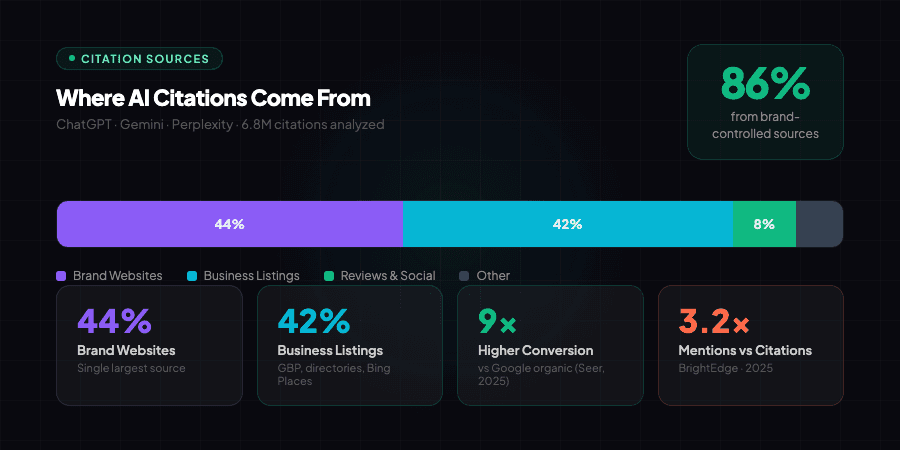
86 % av alla AI-citeringar i ChatGPT, Gemini och Perplexity kommer från källor som varumärket redan kontrollerar — 44 % från varumärkets egna webbplatser och 42 % från företagslistningar (Yext, analys av 6,8 miljoner citeringar på 1,6 miljoner frågor per plattform, juli–augusti 2025). Den mest effektfulla GEO-investeringen är att optimera det du redan äger.
Företagslistningar står för 42 % av alla citeringar i Yext-studien, trots att de är mindre innehållsrika än hela webbplatser. Se till att din Google Företagsprofil, Bing Places, Apple Maps, LinkedIn-företagssida och relevanta branschkataloger (G2, Capterra, Clutch, Trustpilot) är fullständigt ifyllda, korrekta och konsekventa i sin varumärkesbeskrivning och kategorier.
Lägg till en llms.txt-fil på din webbplats — ett textdokument på din-domain.se/llms.txt som berättar för AI-sökrobotar exakt vad ditt varumärke gör, dina viktigaste produkter eller tjänster och de fakta du vill ha citerade. Detta format, modellerat efter robots.txt, börjar bli en standardsignal för LLM-robotar. Formulera ditt unika värdeerbjudande i två till tre tydliga, deklarativa meningar.
För etablerade varumärken är en Wikidata-enhet och en Wikipedia-artikel bland de enskilt starkaste GEO-signalerna som finns. AI-modeller utbildas i stor utsträckning på och citerar ofta Wikipedia. Om ditt varumärke kvalificerar sig enligt Wikipedias regler för notabilitet, är skapandet av en artikel en av de mest kraftfulla GEO-åtgärderna. Skapa åtminstone en verifierad Wikidata-enhet med korrekta strukturerade egenskaper för din organisation.
Steg 4: Håll ditt innehåll aktuellt och omfattande
Aktualitet (recency) är den näst starkaste indikatorn för ChatGPT-citeringar efter domänauktoritet. Data från SE Ranking visar att innehåll som uppdaterats inom de senaste tre månaderna i genomsnitt får 6,0 ChatGPT-citeringar per sida, jämfört med 3,6 för inaktuella sidor — en citeringspremie på 67 % för färskt innehåll (SE Ranking, 2025).
Du behöver inte skriva om sidor från grunden för att fånga aktualitetssignalen. Att lägga till ett datum för 'senast uppdaterad', byta ut gamla statistiska uppgifter mot nyare data, lägga till ett avsnitt om den senaste utvecklingen och återpublicera med dagens datum är alla erkända signaler för aktualitet. För AI-citeringar är det viktigaste att innehållet återspeglar det nuvarande läget i din bransch.
Skapa en kalender för innehållsuppdateringar: granska dina 20 viktigaste sidor baserat på organisk trafik varje kvartal. Sidor som täcker tidskänsliga ämnen — prissättning, regleringar, benchmarks, branschpraxis — bör ses över och uppdateras var tredje månad. Inaktuellt innehåll förlorar ChatGPT-citeringar snabbare än det förlorar Google-rankning.
Så spårar du ditt varumärkes synlighet i ChatGPT
Du kan inte optimera det du inte mäter. Den primära metrik för varumärkets prestanda i ChatGPT är Share of Model (SoM) — andelen relevanta AI-frågor där ditt varumärke citeras eller nämns. ChatGPT driver nu 87,4 % av all AI-referenstrafik (Semrush, mars 2026), vilket gör spårning av Share of Model till den nödvändiga ledande indikatorn för varumärkesprestanda i AI-eran.
Verktyg för spårning
Yozigo tillhandahåller automatiserad spårning av Share of Model över ChatGPT, Claude, Gemini och Perplexity — skickar in varumärkesrelevanta frågor enligt ett schema och mäter citeringsfrekvens över tid. För manuell spårning, kör 10 till 20 relevanta frågor varje vecka i ChatGPT Search-läge och logga när ditt varumärke visas som ett omnämnande eller en citerad källkod.
Viktiga mätvärden att bevaka
citeringsfrekvens (procentandel av svaren som citerar din URL), omnämnandefrekvens (procentandel av svaren som namnger ditt varumärke utan länk), Share of Model per ämneskluster och trendriktning över 30 och 90 dagar. BrightEdge-riktmärket visar att 44 % av alla frågor ger noll varumärkesomnämnanden — om du konsekvent ligger under detta i din kategori finns det en betydande GEO-möjlighet.
Vanliga frågor
Börja optimera för synlighet i ChatGPT idag
ChatGPT har vuxit från noll till 900 miljoner veckovisa användare på under tre år, och AI-söktrafik växer nu 165 gånger snabbare än organisk sök (Ahrefs / Graphite, 2025–2026). Varumärkena som visas konsekvent i ChatGPT-svar hamnar inte där av en slump.
Fyrstegsramverket
bygg domänauktoritet genom digital PR och medcitering; strukturera varje sida med svar-först-format och citeringskapslar; äg ditt varumärkes digitala fotavtryck över webbplatser, listningar och Wikidata; och uppdatera ditt viktigaste innehåll var tredje månad. Genomför dessa steg konsekvent så optimerar du exakt för där din nästa kund redan söker.
Yozigo spårar din Share of Model över ChatGPT, Gemini, Claude och Perplexity — vilket ger dig data för att mäta dina GEO-framsteg och prioritera vad du ska optimera härnäst.