How to Structure Content So AI Models Cite It More (2026)
The page structures that make ChatGPT, Perplexity and Google’s AI quote a passage: answer-first sections, sourced numbers, real tables and named authors, with what the research and our own data show about each.
How should you structure content so AI models cite it?
TL;DR: To make your content more likely to get cited by AI search engines, write each section as a self-contained answer: a question-style heading, a 40–60 word answer with one sourced number, then the detail. Use real tables for comparisons, name the author, and update the page monthly. In the Princeton GEO study, adding citations, quotations and statistics lifted visibility in AI answers by up to 40%, while keyword stuffing made it worse.
Key takeaways
- Citing sources and improving fluency each raised visibility by about 28% (Princeton, ACM KDD 2024).
- Keyword stuffing cut visibility by about 8–10%.
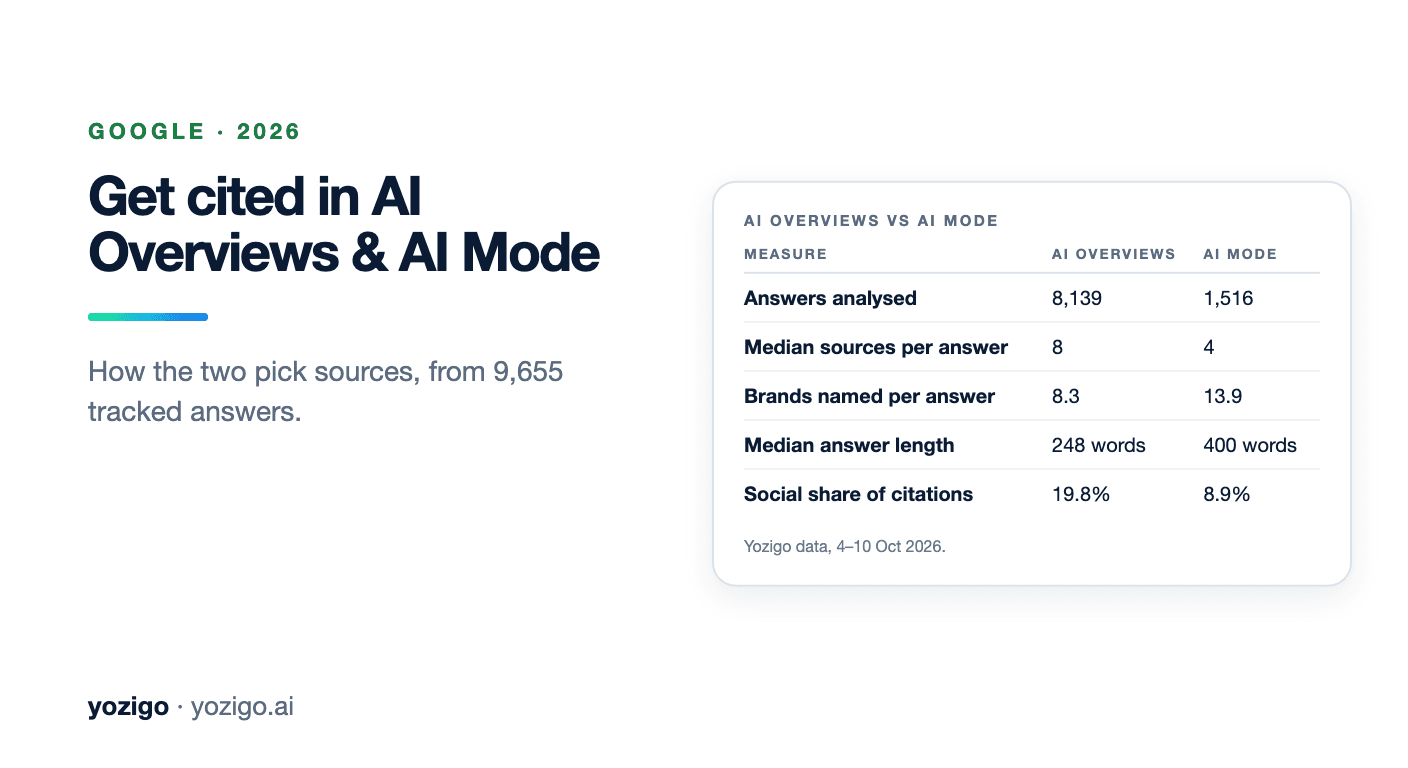
- AI Overviews are a median of 248 words, so they quote short, complete passages.
- 76.4% of top-cited pages were updated within 30 days (Ahrefs).
What does the research say works?
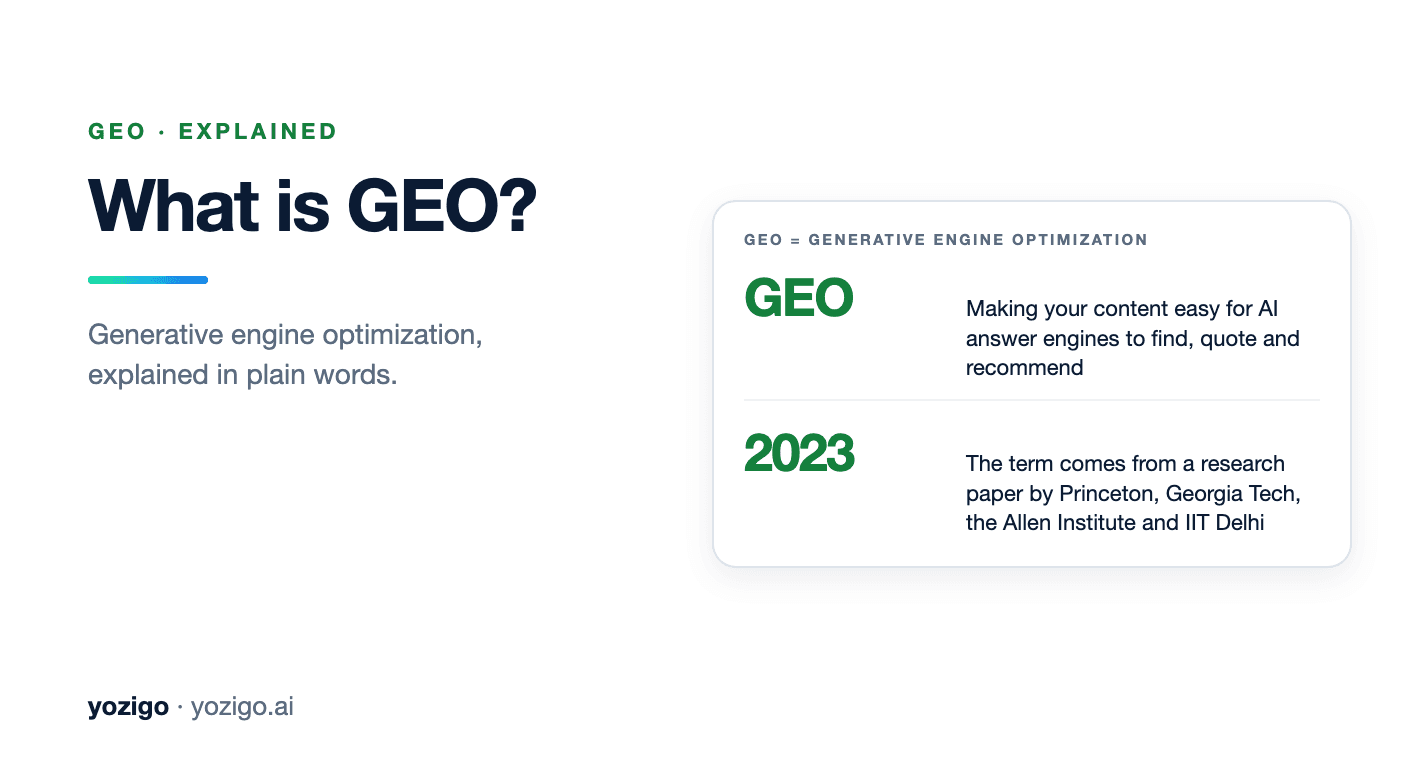
The best evidence is the GEO study by researchers from Princeton, Georgia Tech, the Allen Institute and IIT Delhi (Aggarwal et al., ACM KDD 2024). Across about 10,000 queries, citing sources and improving fluency each raised a page’s visibility in AI answers by roughly 28%, and combining citations, quotations and statistics gave up to 40%. Keyword stuffing scored about 8% below doing nothing.
The pattern is simple
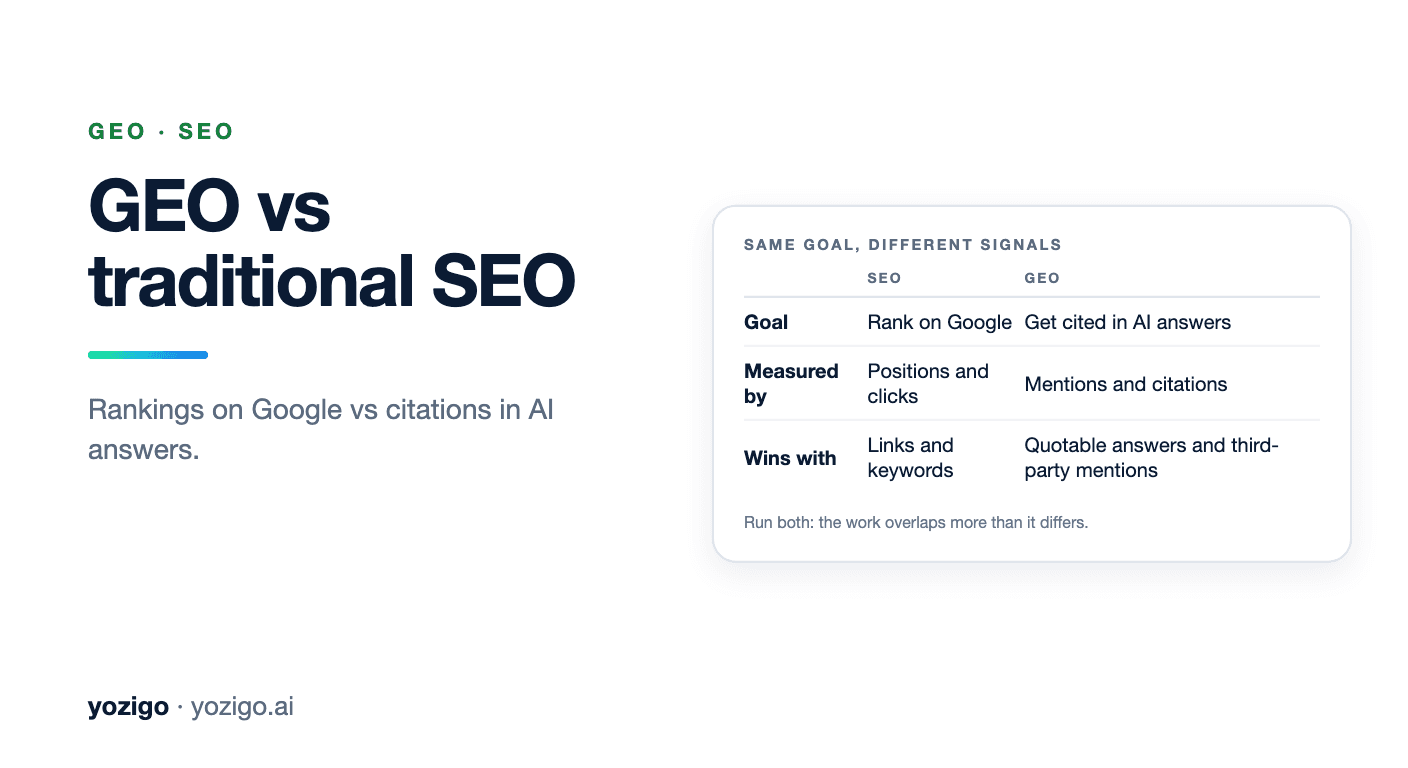
AI engines quote passages that are easy to lift and safe to repeat. A sentence with a number and a named source is both. A paragraph that circles the point is neither. Our list of content mistakes that block AI citations covers the reverse side.
The effect held across engines in the study’s Perplexity tests, where keyword stuffing scored about 10% below baseline.
What structure should each section follow?
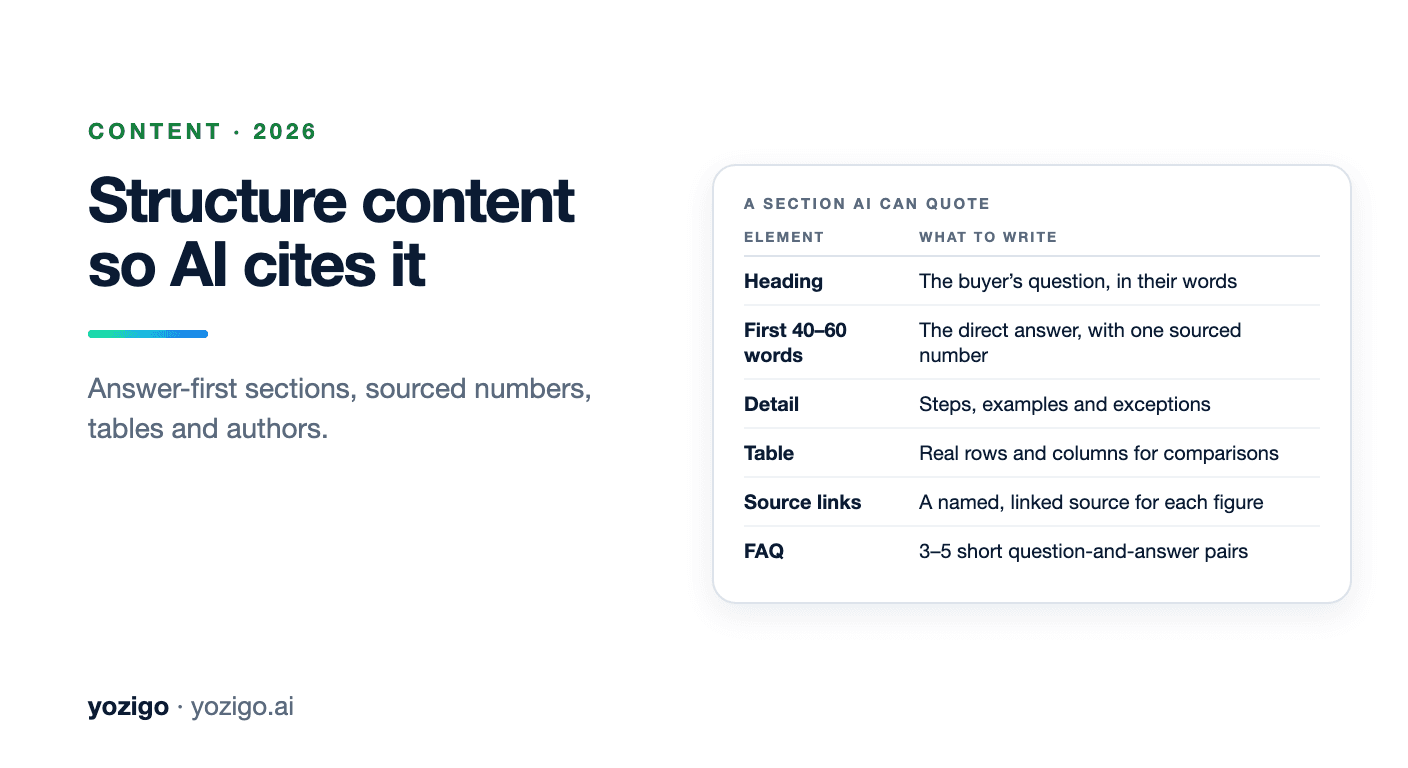
| Element | What to write | Why it helps |
|---|---|---|
| Heading | The question a buyer asks, in their words | Matches the searches engines run before answering |
| First 40–60 words | The direct answer with one number and its source | A complete, quotable passage |
| Detail | Steps, examples, exceptions | Supports the answer and covers follow-ups |
| Table | Real rows and columns for any comparison | Engines extract structured comparisons cleanly |
| Source links | Named, linked sources for each figure | Makes the claim safe to repeat |
| FAQ | 3–5 short question-and-answer pairs | Answers related questions in one place |
Each section should open with a 40–60 word answer that includes one sourced number. Google AI Overviews had a median length of 248 words in our tracking (Yozigo, October 2026), so engines quote short, complete passages, and strong heading matches earned 41% citations against 29% for weak ones (AirOps, 2026).
Aim for most headings to be questions. Keep paragraphs under about 80 words and sentences short. If a section needs more than one idea, split it into two sections with two headings.
Apply the same pattern to every section, not only the first: engines retrieve passages, so each section competes on its own for the question in its heading.
Does answer length differ between AI engines?
Yes, and it changes what gets quoted. In answers we recorded in one week, Google AI Overviews had a median of 248 words, Perplexity 306, AI Mode 400, Gemini 490, Copilot 493 and ChatGPT 618. Short engines quote one tight passage; long ones combine several sources.
That is why the opening answer matters most. It is the passage the shortest engines take, and it frames how the longer ones summarise you. Per-engine detail is on our AI search trackers page.
Write the opening for the shortest engine and the detail for the longest. A 50-word answer followed by 150 words of steps, examples and sources serves both, and keeps each section long enough to stand on its own as a quotable passage.
Which trust signals help a page get cited?
A named author
Link a real person with a profile page and relevant experience. Anonymous pages are treated with more caution by readers and models alike.
Dates you keep current
Show the publish and update dates, and update facts monthly. Freshness was common to 76.4% of top-cited pages in Ahrefs’ study.
Structured data that matches the page
Article, FAQPage and Organization markup should describe exactly what is visible.
Mentions elsewhere
A claim that appears only on your site is weaker than one repeated by others. Brands are 6.5 times more likely to be cited through third-party sources (AirOps, 2025).
None of these signals is new, which is the point: AI engines reward the same trust markers a careful reader looks for.
How do you know if the new structure worked?
Measure the questions the page targets for at least two weeks before and after. AI engines often cite a site without naming the brand: in 203,267 unbranded answers, brands’ own sites were cited without a mention in 2.1–7.9% of answers (mention gap study), so track citations as well as mentions.
Track the questions the page targets before and after the change, on each engine, for at least two weeks. Look for the page appearing in cited sources, not only for your brand name in the answer: AI often cites a site without naming the brand, as our mention gap study shows. Yozigo’s AI Readiness audit checks headings, answer-first passages and schema on each page.
Change one thing at a time where you can, so you know which edit moved the result.
What does an AI-ready section look like in practice?
An AI-ready section passes one test
the first two sentences answer the heading on their own. The Princeton GEO study found adding citations, quotations and statistics lifted visibility by up to 40% (Aggarwal et al., ACM KDD 2024), and a rewrite like the one below adds all three.
Here is the same section written two ways. Before: “When it comes to choosing the right CRM, there are many factors that businesses need to consider, and every company is different, so it really depends on your needs and budget.” Nothing in it can be quoted as an answer.
After
“Small B2B teams should pick a CRM with a free tier, email sync and a pipeline view. In [survey name, year], [X]% of [sample] said ease of setup mattered more than features.” The brackets stand for a real, linked statistic. The second version answers the question, carries one sourced number, and stands on its own if an engine lifts only those two sentences.
Which format fits which kind of question?
| Question type | Example | Best format |
|---|---|---|
| Definition | What is share of model? | One-sentence definition, then an example and a short table |
| Comparison | X vs Y | A table with the same rows for each option, then when to pick each |
| Best-of list | Best tools for agencies | Criteria, a comparison table, then one short entry per option with a weak spot |
| How-to | How to track brand mentions | Numbered steps, each starting with the action |
| Pricing | How much does X cost? | A price table with plan limits and the date checked |
Format follows intent. In AirOps’ study of 16,851 queries, Wikipedia earned the highest citation rate, 59.2%, through dense pages averaging 31 lists each (AirOps, April 2026), which shows how much structured formats help extraction.
Match the format to the intent, and keep one main question per page. Our AI visibility report template and 12 best AI visibility tools are examples of the report and best-of formats.
When a page has to serve several intents, split it. A comparison page and a how-to page on the same topic will each be cited more often than one page trying to do both, because each matches its searches more closely.
What do Google, Bing and OpenAI say about getting content cited?
All three platforms publish guidance, and none requires special markup. Google says AI features need indexed, snippet-eligible pages; OpenAI says blocking OAI-SearchBot removes a site from ChatGPT search answers; and Bing’s AI Performance report, launched in February 2026, shows which pages Copilot cites.
All three point to the same basics
be crawlable, be indexed, and answer clearly. Google says a page must be indexed and eligible for a snippet to appear in AI Overviews or AI Mode, and that no special optimisation is needed beyond helpful, people-first content (Google Search Central). OpenAI says sites that block OAI-SearchBot are not shown in ChatGPT search answers (OpenAI).
Bing goes furthest on measurement. Its AI Performance report shows which pages Copilot cites and the grounding queries behind them, and Bing suggests using it to improve clarity, structure and completeness on pages that are indexed but rarely cited (Bing Webmaster Blog). Our guide to Bing indexing vs AI citations shows how to read it.
Frequently asked questions: structuring content for AI
Pages with a direct answer at the top of each section, sourced statistics, real tables and FAQs. In the Princeton GEO study, citations, quotations and statistics together lifted visibility by up to 40%.
Open with a 40–60 word answer, then add detail. Google AI Overviews had a median length of 248 words in our data, so short complete passages get quoted.
No. It cut visibility by about 8% in the Princeton GEO study, and by about 10% in its Perplexity tests.
Not all, but most should be. Engines often search using the buyer’s question, so a heading in the same words is easy to match.