What Is Share of Model? How to Measure Your AI Share
Share of Model measures how often AI engines name your brand compared with competitors. What it is, where the term comes from, how to calculate it, and benchmarks from 203,267 unbranded AI answers.
What is Share of Model?
Key takeaways
- —Share of Model is your brand's share of mentions in AI answers compared with your competitors.
- —The term was introduced by Jack Smyth at the agency Jellyfish in 2024.
- —Measure it on unbranded prompts, per engine.
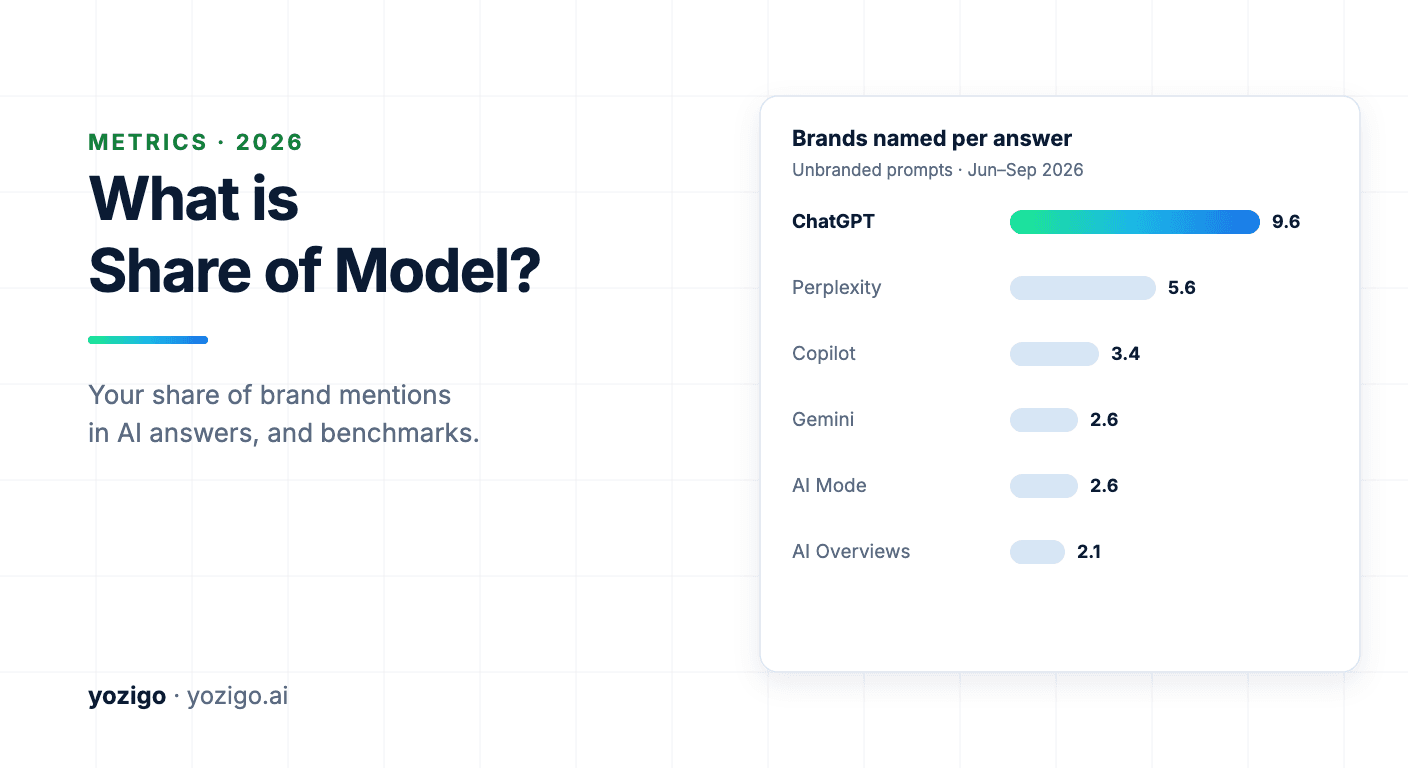
- —How many brands an engine names changes what a good share looks like: 9.6 per ChatGPT answer, 2.1 per AI Overview.
Share of Model is the AI-era version of share of voice: of all the times AI engines name a brand in your category, how many of those mentions are yours. The term was introduced by Jack Smyth at Jellyfish in 2024 and has since been picked up by the ANA and Marketing Week.
It matters because AI answers are a shortlist. A buyer who asks for recommendations usually sees a handful of names, and the brands with the biggest share get considered first.
How do you calculate Share of Model?
The formula Yozigo uses
Share of Model = your mentions ÷ (your mentions + mentions of the competitors you track) × 100, counted across the same set of AI answers.
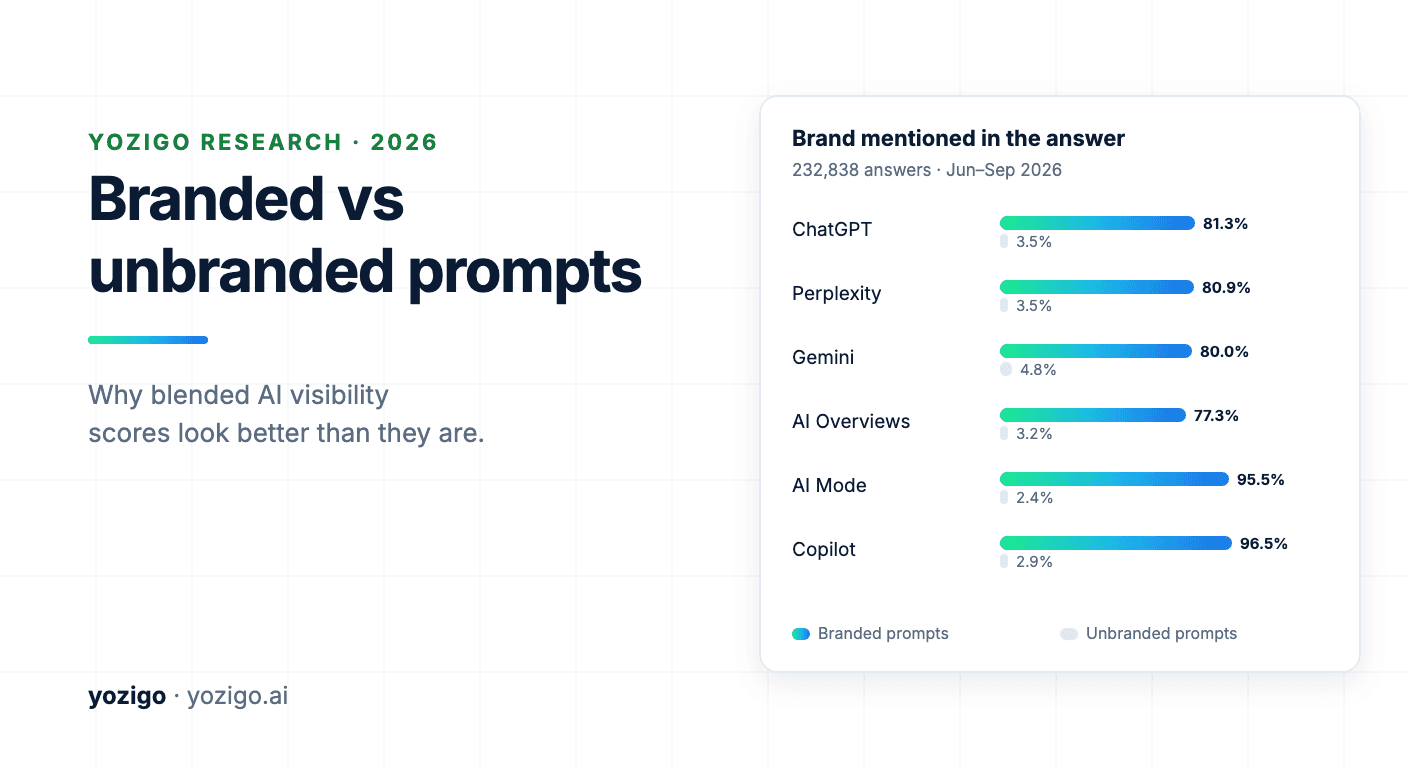
Three choices make the number meaningful. Use unbranded prompts: questions that name you inflate your share, as our branded vs unbranded data shows. Keep the prompt set fixed so changes reflect AI, not your tracking. Report per engine, because engines name very different numbers of brands.
What is a good Share of Model?
| Engine | Brands named per answer | Brand mention rate | Average position when named |
|---|---|---|---|
| ChatGPT | 9.6 | 3.5% | 1.54 |
| Perplexity | 5.6 | 3.5% | 2.52 |
| Microsoft Copilot | 3.4 | 2.9% | 1.83 |
| Gemini | 2.6 | 4.8% | 1.60 |
| Google AI Mode | 2.6 | 2.4% | 1.70 |
| Google AI Overviews | 2.1 | 3.2% | 1.77 |
It depends on how many brands the engine names. Figures below are averages from 203,267 unbranded answers across 37 brands, 29 June – 27 September 2026.
How do you read Share of Model across engines?
On ChatGPT, which names nearly ten brands per answer, a 10% share can simply mean you're on the list. On AI Overviews, with about two names per answer, a 10% share means you're often one of two. So compare your share on each engine with that engine's average list length, not with other engines.
Watch position too. When brands were named on unbranded prompts, their average position ranged from 1.5 (ChatGPT) to 2.5 (Perplexity). Being named first matters, because buyers read the top of the answer.
Benchmarks here come from Yozigo's tracking of 37 brands on six engines, 29 June to 27 September 2026 (203,267 unbranded answers).
How do you track Share of Model?
Start with 30 to 100 unbranded prompts and 3 to 5 competitors.
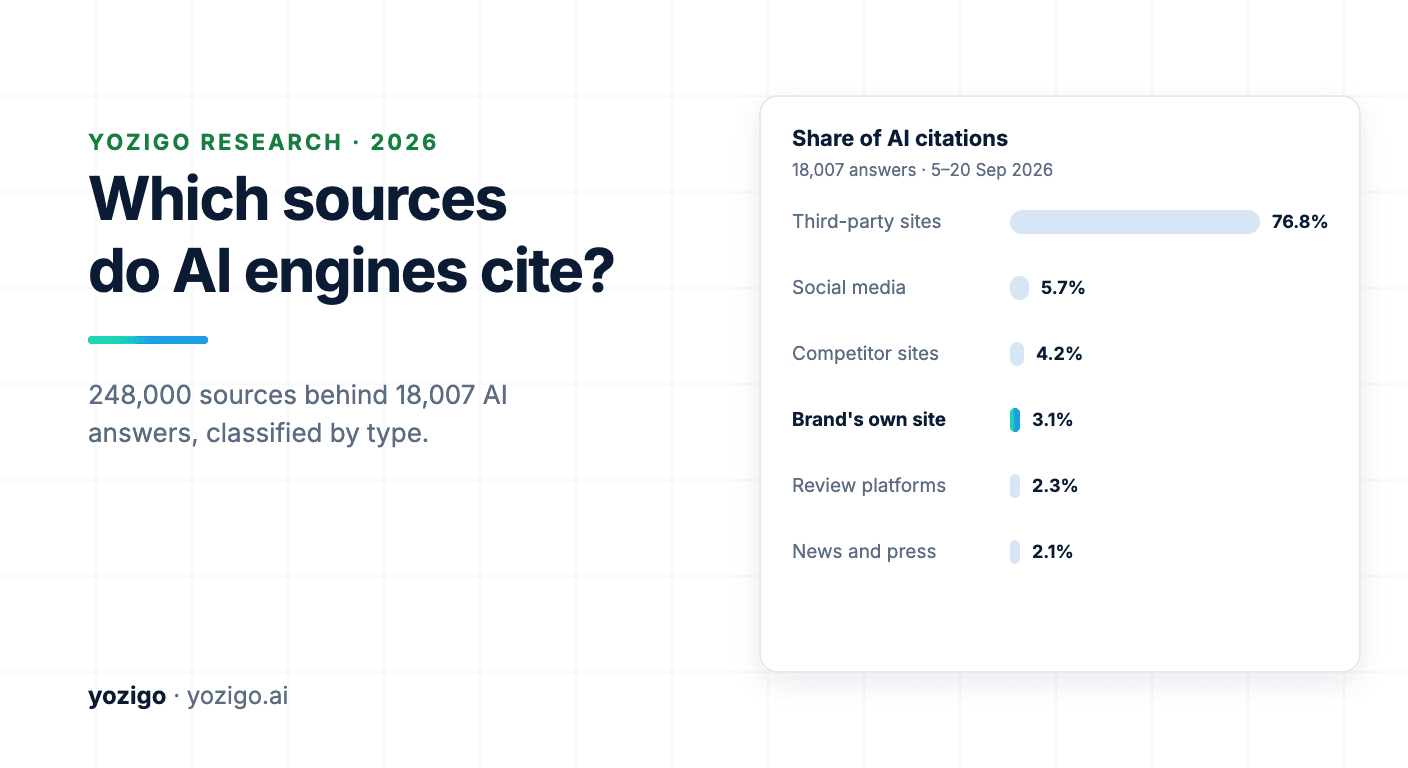
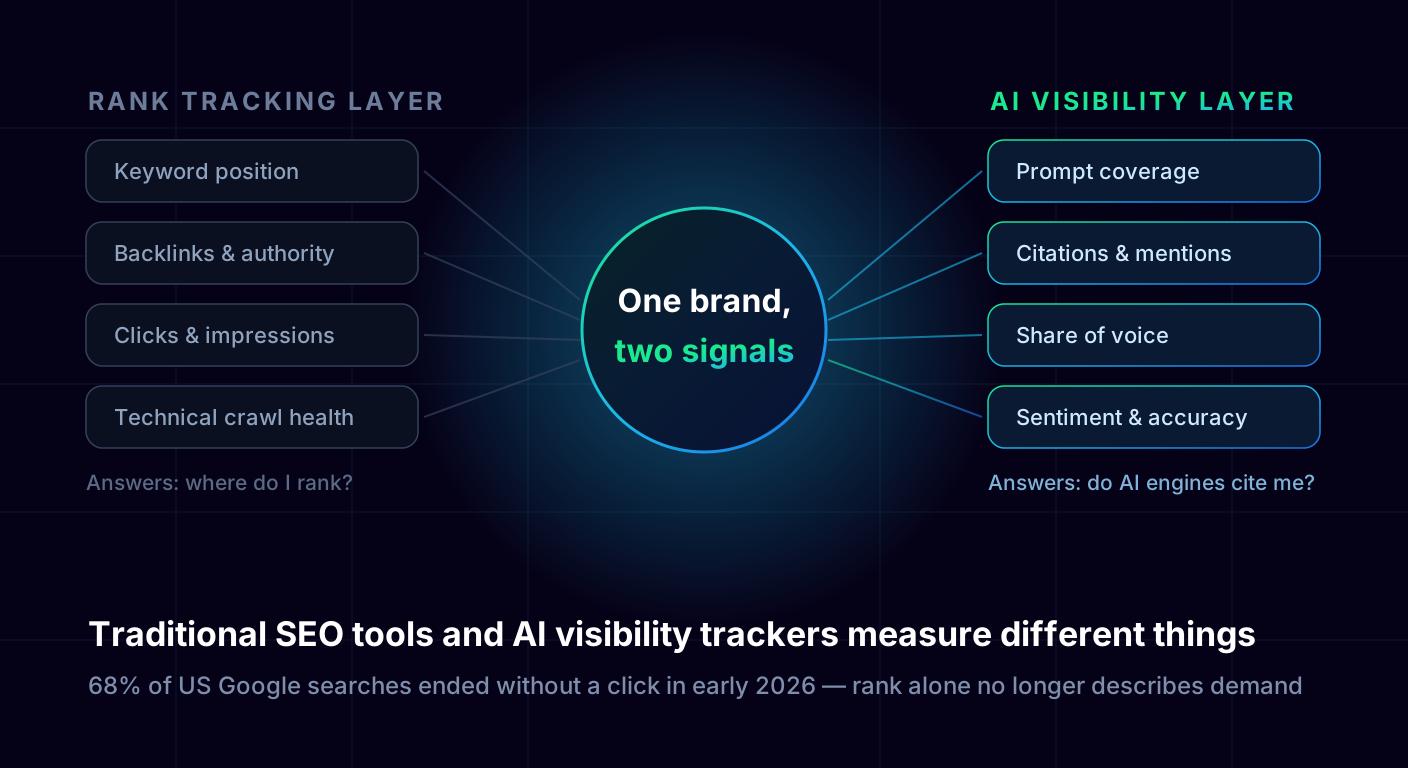
Track 30 to 100 unbranded prompts that match how your buyers ask, daily, on the engines they use, with your main competitors added. Yozigo's AI Visibility reports share of voice per engine and a Discovery view for unbranded prompts only. Then raise it by getting named on the pages AI cites; see Citation Placements.
Frequently Asked Questions: Share of Model
A metric for how often AI models name your brand compared with competitors in answers about your category. It was introduced by Jack Smyth at Jellyfish in 2024.
Share of voice counts mentions in media or search results. Share of Model counts mentions inside AI-generated answers from engines like ChatGPT, Gemini and Perplexity.
Compare it with how many brands each engine names. In our 2026 data ChatGPT named 9.6 brands per unbranded answer and AI Overviews 2.1, so the same share means different things on each.
Daily runs, reported weekly or monthly. AI answers vary from day to day, so a single check is noise; a 7-day average shows the trend.